High-Fibre Chicken Tray Bake with Roast Vegetables and Chickpeas
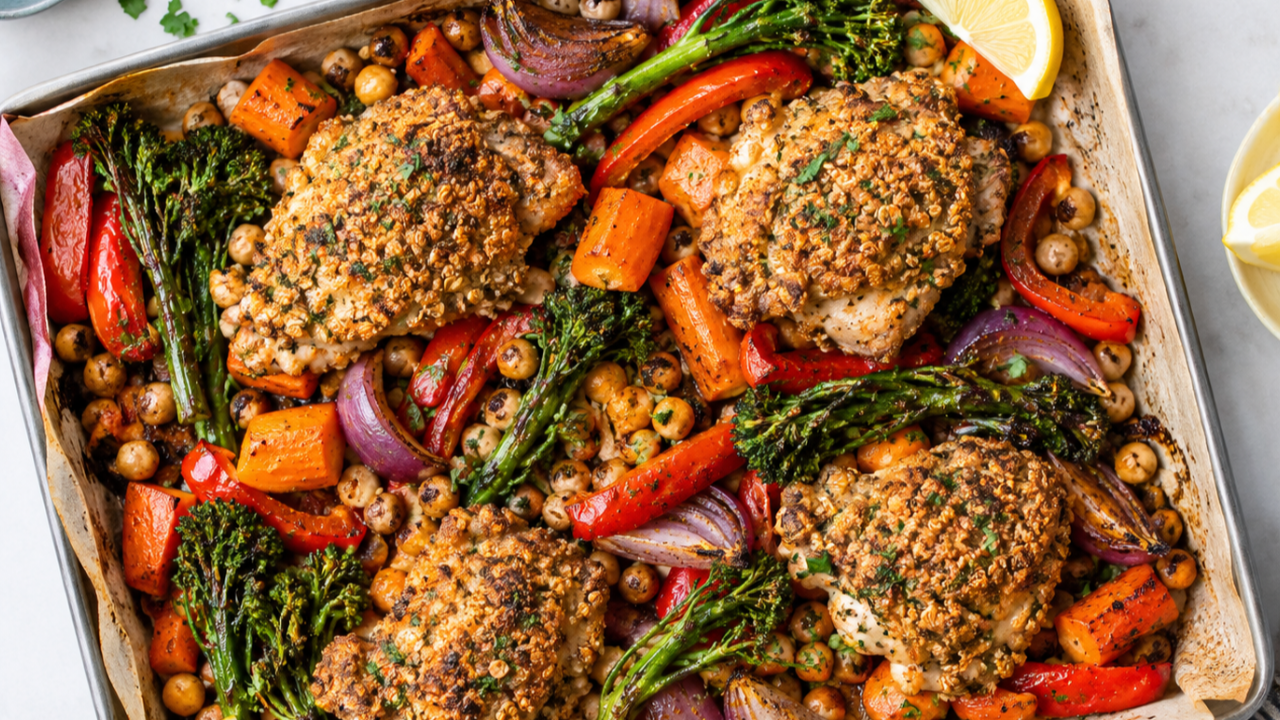
Looking for an easy chicken tray bake that delivers on flavour, protein and fibre? This crispy oat-crumbed chicken with roast vegetables and chickpeas is a simple, family-friendly dinner made with everyday ingredients and minimal washing up.
Rolled oats and ground linseed create a crunchy parmesan crumb, while carrots, capsicum, broccolini and chickpeas add colour, texture and a variety of fibres. It's a delicious way to bring more fibre into your meals without feeling like you're eating a special “gut health” recipe.
Serves: 4
Prep time: 15 minutes
Cook time: 40–45 minutes
Ingredients
-
600 g chicken thigh fillets
-
½ cup traditional rolled oats
-
2 tbsp ground linseed
-
2 tbsp finely grated parmesan
-
1 tsp smoked paprika
-
1 tsp dried oregano
-
2 tbsp olive oil, plus extra for the vegetables
-
2 carrots, cut into chunks, skin on
-
1 red capsicum, cut into strips
-
1 bunch broccolini, thicker stems halved lengthways
-
1 x 400 g can chickpeas, rinsed and drained
-
1 red onion, cut into wedges
-
3 garlic cloves, smashed
-
1 lemon, cut into wedges, to serve
-
Salt and black pepper, to taste
Method
-
Preheat to 200°C fan-forced. Line a large baking tray with baking paper, or use two trays if needed to avoid overcrowding.
-
Add the carrots, capsicum, chickpeas, red onion and garlic to the tray. Drizzle with olive oil, season with salt and pepper, and toss to coat. Roast for 10 minutes.
-
Pulse the rolled oats briefly in a food processor until coarsely ground. Mix with the ground linseed, parmesan, smoked paprika, oregano and 2 tbsp olive oil until the mixture starts to clump together.
-
Pat the chicken thigh fillets dry with paper towel. Press the oat mixture firmly onto the top of each fillet to create an even coating.
-
Remove the tray from the oven and nestle the chicken among the vegetables, keeping the crumb facing upwards. Return to the oven for 20 minutes.
-
Toss the broccolini with a little olive oil and add it to the tray. Roast for another 10-15 minutes, until the chicken is cooked through, the vegetables are tender and the oat crumb is golden. Check that the thickest part of the chicken reaches at least 75°C.
-
Squeeze fresh lemon juice over the chicken and vegetables, then serve warm.
Tips
Give the ingredients enough space. Overcrowding the tray can cause the vegetables to steam instead of roast. Use two trays if necessary.
Keep the crumb crunchy. Pat the chicken dry before adding the oat mixture and press the crumb firmly into place. Avoid turning the chicken during cooking.
Make it your own. Swap the carrots or capsicum for other vegetables you have on hand, or use chicken breast instead of thigh fillets. Cooking times may vary depending on the size and thickness of the chicken.
Make it gentler on a sensitive gut. Chickpeas, onion and garlic contain fermentable carbohydrates that can trigger symptoms in some people with IBS. Try a smaller portion of chickpeas and replace the red onion with the green tops of spring onions. Adjust portions to suit your individual tolerance.
How this chicken tray bake supports gut health
Fibre does more than help keep your bowels regular. Different types of fibre interact with water, stool and gut microbes in different ways. This recipe brings together three useful categories: GEL, BULK and FEED.
GEL: Oats and ground linseed
Oats and ground linseed contain gel-forming soluble fibre that absorbs water and forms a gel in the digestive tract. This type of fibre can help support stool consistency and regularity. Ground linseed is an easy addition to meals, while oats provide a familiar ingredient for the crunchy chicken coating.
BULK: Carrots, capsicum and broccolini
Vegetables provide a range of fibres that contribute to stool bulk and support normal bowel function. Carrots, capsicum and broccolini also add colour, texture and valuable nutrients to this one-tray meal.
FEED: Chickpeas, onion and garlic
Chickpeas, onion and garlic contain fermentable carbohydrates that gut microbes can use. Some of these carbohydrates are prebiotic, meaning they can selectively support beneficial gut microbes. However, fermentation can also produce gas, so portion size and individual tolerance matter, particularly for people with IBS.
These categories overlap. A food can contribute to more than one type of fibre, and there is no need to classify every ingredient perfectly. The aim is to include a variety of fibre-rich foods in ways that work for your gut!
Doing everything right, but more fibre only makes you feel worse?
You asked for it, so I'm putting it together.
Fibre for Grumpy Guts is coming.
Maybe you’re having oats for breakfast, seeds on everything and plenty of veg, and you’re still bloated or waiting for a decent poo. Maybe you added more fibre because everyone said it would help, and you felt worse. Or you’ve cut out onion, garlic, bread and beans and you’re still not comfortable.
Often the trouble isn’t fibre itself. It’s the mix of fibre types, how much, and the order you add them in.
Imagine easier poos, less bloating, and enjoying more of the foods you love.
That’s what my new mini course will help you with: which fibre to start with, how much and when, and how to build up from there.
Grab my free Fibre for Grumpy Guts starter guide and I’ll add you to the waitlist too. Waitlist members get first access on Wednesday 11 November and the founding price of $37 for 3 days only, plus two live check-ins with me. After that, it’s $57 for everyone.
And follow @the.guthealthdietitian on Instagram for more fibre tips while I finish it.
You are signing-up for notification ONLY by completing this form. No tricky stuff! We promise never to spam you.