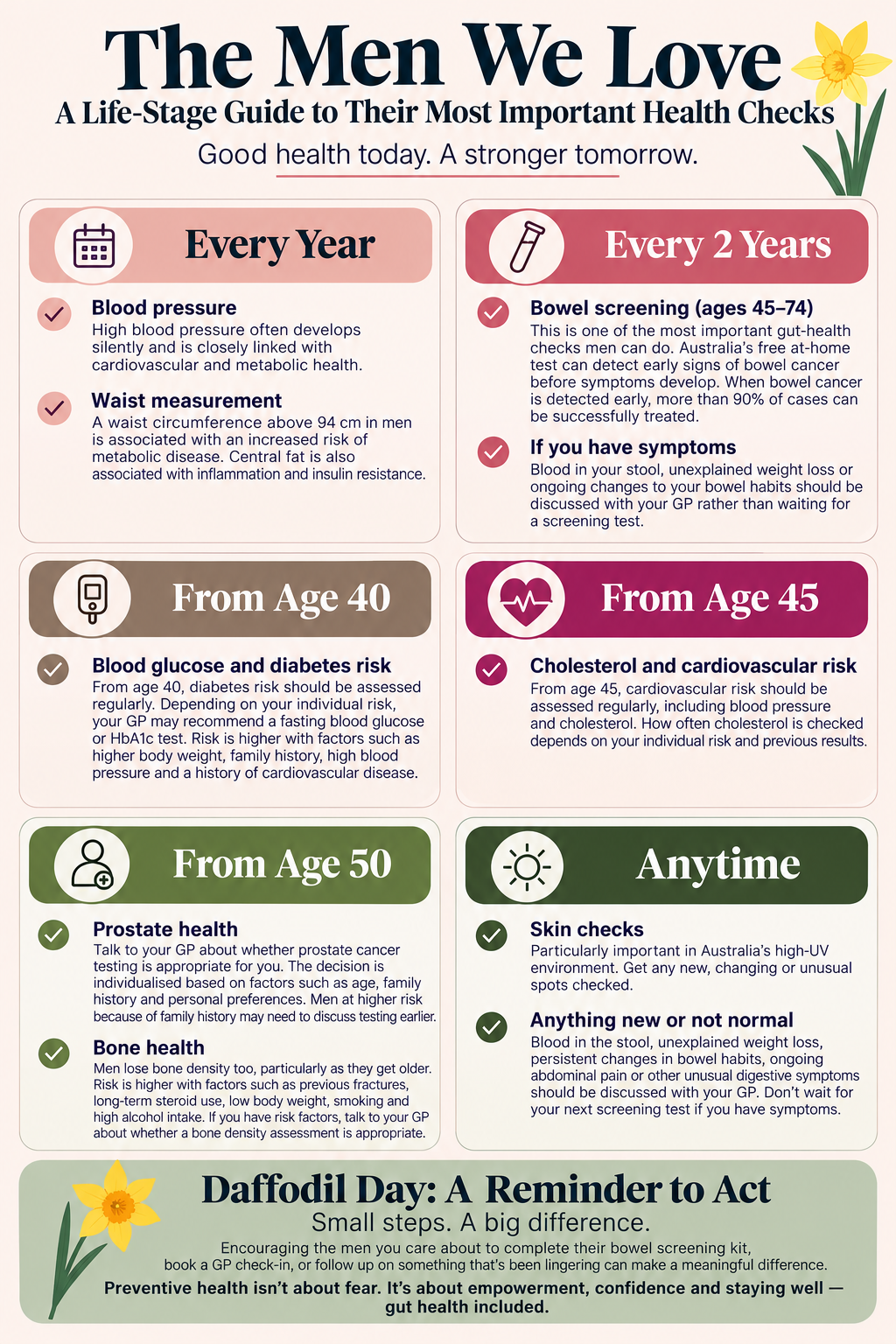
The Men We Love: A Life-Stage Guide to Their Most Important Health Checks

Many of us think deeply about our long‑term health as we move through middle-age, and that often extends to the people we care about. Middle-age is a time when health risks begin to change for many of us, and staying informed helps us support long‑term wellbeing in a way that feels proactive rather than reactive.
Daffodil Day is a reminder that cancer prevention and early detection matter for everyone, including the men in our lives who may not always have health checks on their radar.
Screening is one of the simplest ways to stay proactive about your health. Bowel cancer is particularly relevant from a gut-health perspective, because Australia’s National Bowel Cancer Screening Program can detect early changes before symptoms develop. Other health checks, such as blood pressure, blood glucose and cholesterol, can also identify metabolic risk before you feel unwell.
It’s common for men to postpone health checks due to time pressures, feeling well, uncertainty about what to ask for, or discomfort discussing symptoms. Recognising these barriers helps us approach preventive health with more understanding and encouragement.
This guide breaks down the key health checks worth knowing about at each life stage, with a spotlight on the ones most connected to gut and metabolic health.
Men’s Health Checks by Life Stage
🔄 Every Year
-
Blood pressure: High blood pressure often develops silently and is closely linked with metabolic health.
-
Waist measurement: A waist circumference above 94 cm in men is associated with an increased risk of metabolic disease. Central fat is also associated with inflammation and insulin resistance.
📬 Every 2 Years
-
Bowel screening (ages 45-74): This is one of the most important gut-health checks men can do. Australia’s free at-home test can detect early signs of bowel cancer before symptoms develop. When bowel cancer is detected early, more than 90% of cases can be successfully treated. If you have symptoms such as blood in your stool, unexplained weight loss or ongoing changes to your bowel habits, speak to your GP rather than waiting for a screening test.
🔢 From Age 40
-
Blood sugar check: From age 40, diabetes risk should be assessed regularly. Depending on your individual risk, your GP may recommend a fasting blood glucose or HbA1c test. Risk is higher with factors such as higher body weight, family history, high blood pressure and a history of cardiovascular disease.
❤️ From Age 45
-
Cholesterol test: From age 45, cardiovascular risk should be assessed regularly, including blood pressure and cholesterol. How often cholesterol is checked depends on your individual risk and previous results.
🧱 From Age 50
-
Prostate conversation with your GP: Talk to your GP about whether prostate cancer testing is appropriate for you. The decision is individualised based on factors such as age, family history and personal preferences. Men at higher risk because of family history may need to discuss testing earlier.
-
Bone health: Men lose bone density too, particularly as they get older. Risk is higher with factors such as previous fractures, long-term steroid use, low body weight, smoking and high alcohol intake. If you have risk factors, talk to your GP about whether a bone density assessment is appropriate. Adequate calcium, vitamin D and resistance exercise also support bone health.
🌞 Anytime
-
Skin checks: Particularly important in Australia’s high-UV environment. Get any new, changing or unusual spots checked.
-
Anything new or not normal: Blood in the stool, unexplained weight loss, persistent changes in bowel habits, ongoing abdominal pain or other unusual digestive symptoms should be discussed with your GP. Don't wait for your next screening test if you have symptoms.
🌼 Daffodil Day: A Reminder to Act
Daffodil Day is about hope, but also action. Encouraging the men you care about to complete their bowel screening kit, book a GP check‑in, or follow up on something that’s been lingering can make a meaningful difference.
Preventive health isn’t about fear. It’s about empowerment, confidence, and staying well through every life stage (gut health included)!
For cancer information and support call Cancer Council’s 13 11 20 Information and Support line.
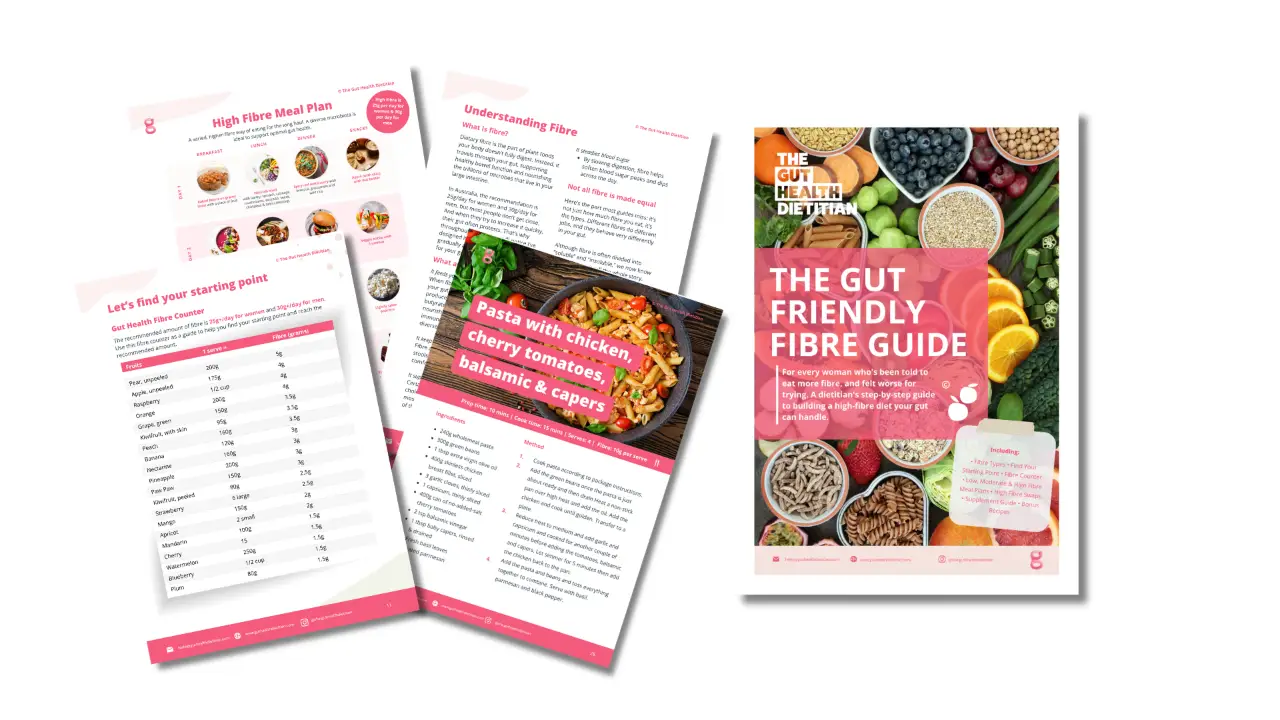
THE GUT FRIENDLY FIBRE GUIDE
An evidence-based guide for women to eat more fibre without making their gut feel worse
If eating more fibre has ever left you feeling worse, fibre probably wasn’t the problem. More likely, your gut just needed you to go slower.
This guide is based on the approach I use with women who want to eat more fibre without making their gut feel worse. We start with where you are now, then build from there slowly enough that your gut can keep up.
It’s food-first, weight-neutral and evidence-based, created by me and my team of Accredited Practising Dietitians.