Struggling to Switch Off at Night? Here's Where to Start
Rest is one of the most overlooked pillars of women’s health, especially in perimenopause and menopause, when sleep can suddenly feel unpredictable, fragmented, or impossible to control. Hot flushes, night sweats, early‑morning waking, racing thoughts, snoring partners, stress, and hormonal shifts can all disrupt sleep quality. And when you’re tired, everything feels harder: mood, appetite, motivation, digestion, movement, patience, decision‑making.
Now trust us, we get it, so many of the things that affect your sleep are completely out of your control. But you don’t need perfect sleep to support your health. What matters most is improving the quality of the rest you can get, and that’s where small, realistic “do it anyway” actions make a real difference.
Hormonal changes during this transition affect:
-
Sleep architecture: especially deep sleep
-
Body temperature regulation: hot flushes and night sweats
-
Stress hormones: making it harder to wind down
-
Mood and emotional steadiness
-
Metabolic health: blood sugar, appetite, cravings
-
Gut function: motility slows when sleep is disrupted
This means rest isn’t just about feeling tired but it’s about supporting your whole system. And while you can’t always control how many hours you get, you can influence the conditions that make rest more restorative.
Keeping your sleep environment cool supports deeper sleep and reduces night‑time waking. Small tweaks help: lighter bedding, breathable fabrics, a fan, or a cool shower before bed.
Nervous system down‑shifting
Gentle practices like stretching, slow breathing, or a short wind‑down routine help lower cortisol and prepare your body for rest. Even 2-3 minutes makes a difference like inhaling for 4 seconds, exhaling for 6, or doing a gentle neck and shoulder stretch.
Reducing sensory disruptions
Snoring partners, street noise, early‑morning light.. these are real barriers. Ear plugs, white noise, and blackout curtains are simple tools that improve sleep quality even when quantity is limited.
Supporting circadian rhythm
Morning light exposure and consistent wake times help regulate hormones involved in sleep. This doesn’t need to be perfect, just consistent enough. If nights are unpredictable, focus on your mornings: step outside for light, hydrate, and move gently, these small anchors help regulate your rhythm even when sleep is messy.
Gut-sleep connection
Your gut and brain communicate constantly. Poor sleep can slow digestion, increase bloating, and affect appetite regulation. Gentle movement, fibre consistency, and balanced meals all support this loop. For example, poor sleep can slow digestion and increase bloating, while consistent fibre and balanced meals help regulate appetite and support steadier energy.
Limiting caffeine
Caffeine stays in your system for hours, and it can disrupt your sleep quality, especially in perimenopause. And it’s not just coffee: black tea, green tea, soft drinks and even chocolate all contribute. Try reducing how much you have, or simply keep it earlier in the day. Even shifting your coffee an hour earlier can help reduce afternoon restlessness and support better sleep.
Evening nutrition
What you eat later in the day can influence how easily you fall asleep and how rested you feel. Balanced meals with protein, fibre and slow‑releasing carbohydrates help stabilise blood sugar, which supports steadier energy and fewer night‑time wake‑ups. Very large or very rich meals close to bedtime can increase reflux or discomfort, making it harder to settle. Aim for a balanced dinner and, if you need something before bed, choose a light option like yoghurt, a banana, or a small handful of nuts. Additionally, going too long without eating (and going to bed hungry) can wake you earlier than planned, or make it harder to fall asleep. A small, balanced snack can help keep things steady overnight.
Alcohol and sleep
Alcohol can make you feel sleepy initially, but it fragments sleep later in the night and can worsen night sweats. If you drink, try keeping it earlier in the evening and pairing it with food to reduce its impact on sleep quality.
If night‑time bathroom trips are disrupting your sleep, try front‑loading your fluids earlier in the day and easing off in the evening. You don’t need to drink less, just shift the timing.
Here are practical, real‑world ways to support rest, especially when sleep feels messy or unpredictable:
-
Can’t fall asleep easily? Try a 2‑minute wind‑down: slow breathing, gentle stretching, or a warm shower. If you struggle to quiet your mind, using apps like Calm or Headspace can help.
-
Partner snoring? Ear plugs or white noise can improve sleep quality dramatically.
-
Waking too early? Keep your room cool and dark; use blackout curtains or an eye mask.
-
Night sweats? Choose breathable bedding and keep a cool glass of water nearby.
-
Busy brain at night? Write down tomorrow’s tasks before bed, a simple brain dump reduces mental load.
-
Struggling with consistency? Anchor one small habit: dim lights after dinner, stretch before bed, or read for five minutes. Choose one habit and start there.
-
Feeling wired? Try gentle nervous‑system downshifting like slow breathing or progressive muscle relaxation.
-
Can’t control sleep quantity? Focus on sleep quality, cooler room, less noise, predictable wind‑down.
- Feeling hungry at bedtime? A small, balanced snack like yoghurt, a banana or a handful of nuts can help stabilise blood sugar and prevent early‑morning waking.
- Having a drink in the evening? If you’re having alcohol, try to keep it earlier in the night and pair it with food, it helps reduce sleep fragmentation and night sweats. Or consider a mocktail alternative like sparkling water with lime and mint, or kombucha over ice for a refreshing, gut‑friendly option.
Rest doesn’t need to be perfect. It just needs to be supported.
Choose one small action this week:
-
Dim lights after dinner
-
Stretch for 2 minutes before bed
-
Use ear plugs or white noise
-
Keep your room cooler
-
Do a short breathing exercise
-
Reduce screen brightness at night
-
Step outside for morning light
-
Write down tomorrow’s tasks before bed
Small steps are the ones you actually stick with. And when you miss a night? Do it anyway tomorrow.
Choose the smallest step that feels possible today towards a better night's rest. And remember, rest looks different for everyone.
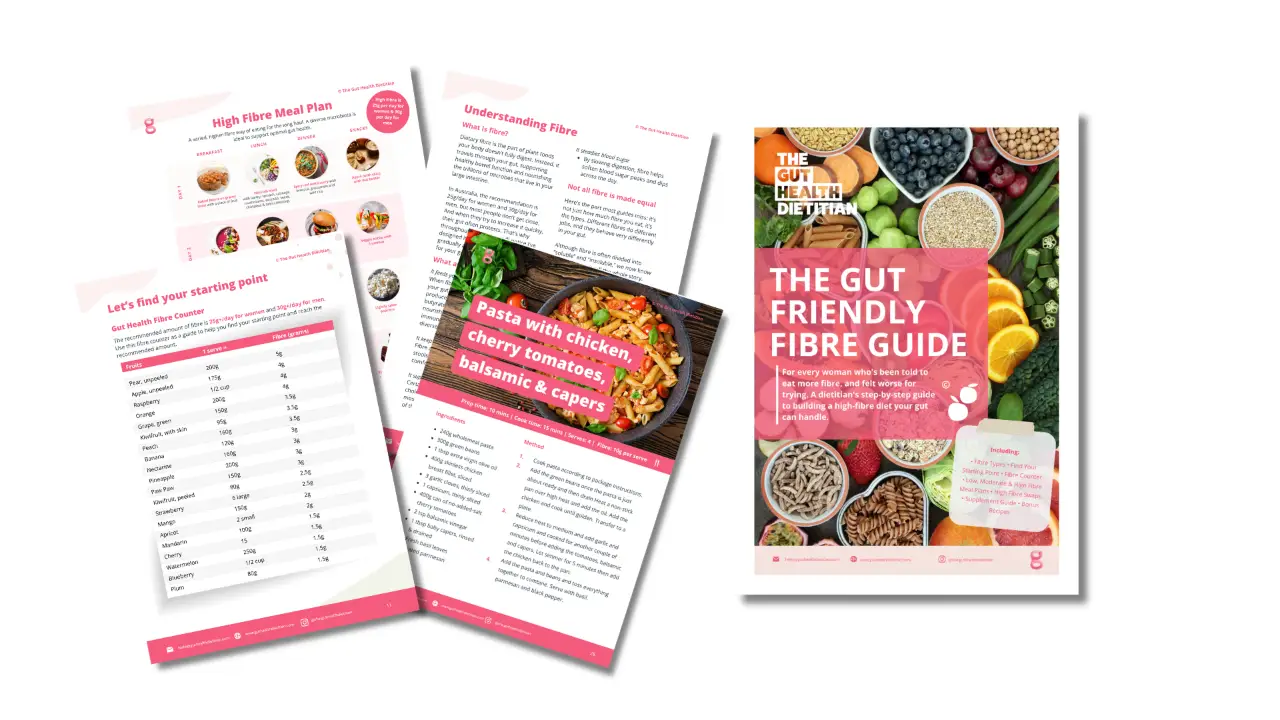
THE GUT FRIENDLY FIBRE GUIDE
An evidence-based guide for women to eat more fibre without making their gut feel worse
If eating more fibre has ever left you feeling worse, fibre probably wasn’t the problem. More likely, your gut just needed you to go slower.
This guide is based on the approach I use with women who want to eat more fibre without making their gut feel worse. We start with where you are now, then build from there slowly enough that your gut can keep up.
It’s food-first, weight-neutral and evidence-based, created by me and my team of Accredited Practising Dietitians.