The Best Exercise for Perimenopause and Menopause Might Surprise You
If you’re in perimenopause or menopause, you’ve probably wondered whether you’re doing the “right” type of exercise.
Should you be lifting heavier weights? Walking more? Doing Pilates? Trying HIIT? And how are you meant to fit all of that in when you’re working, looking after everyone else, not sleeping properly and feeling tired before the day has even begun?
There is so much noise around exercise in menopause that it can leave you feeling as though whatever you’re doing is never enough.
I’m a dietitian, not an exercise physiologist, so I’m not going to give you a detailed training program or tell you exactly how many squats to do. What I can help you understand is how movement fits into the bigger picture of your health, including your muscles, bones, metabolism, mood and, of course, your gut.
So, what is the best exercise for perimenopause and menopause?
The answer may be simpler than you expect.
There isn’t one type of exercise that comes out on top for every woman or every menopause symptom. Large reviews of exercise studies in menopausal women show that different types of movement offer different benefits.
Strength training is particularly helpful for maintaining muscle and supporting bone health. Aerobic exercise such as walking, swimming and cycling supports cardiovascular fitness, mood and metabolic health. Yoga and tai chi can help with stress, sleep, flexibility and stability, while pelvic floor exercises can improve bladder control and other pelvic floor symptoms.
Australian movement guidelines recommend a combination of aerobic activity and muscle-strengthening exercise because together they support a much broader range of health outcomes.
But the best place to start is still the exercise you are willing and able to do consistently. You can build from there.
Why movement becomes so important during menopause
As oestrogen levels decline, we become more vulnerable to losing muscle and bone. Many women also notice changes in their body composition, blood pressure, cholesterol, blood glucose, sleep and mood.
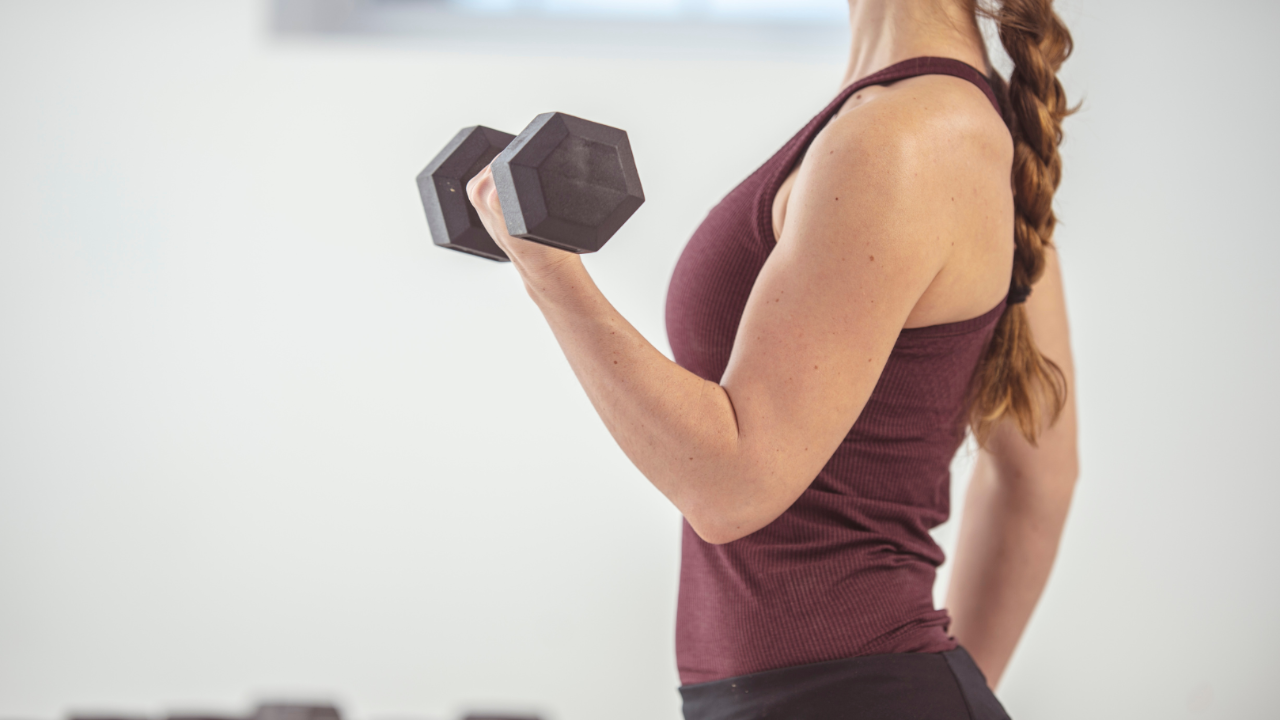
This is where strength training becomes particularly useful. Working your muscles against resistance helps maintain and build muscle, supports your bones and makes everyday things, such as carrying shopping, climbing stairs and getting up from the floor, feel easier.
Aerobic movement, including brisk walking, cycling, dancing and swimming, supports your heart, lungs, mood and metabolic health. It can also help reduce body fat, while strength training helps you maintain the muscle that is so easy to lose during and after menopause.
For bone health, weight-bearing movement such as walking, stair climbing and dancing is also important. Higher-impact exercise, including jogging, hopping and jumping, can provide a stronger stimulus to the bones when it is suitable for your body.
You don’t need to choose one. A combination of strength and aerobic movement appears to offer the broadest benefits, particularly for muscle, bone and metabolic health.
What does exercise have to do with gut health?
Probably more than you realise.
Regular movement can help stimulate the muscles of the digestive tract and support more regular bowel movements, which is particularly useful if constipation has become an issue during perimenopause or menopause.
Exercise can also help regulate stress and support sleep. Both are closely connected to the gut through the gut-brain axis. If you have ever noticed your bloating, reflux or bowel habits becoming worse during a stressful week, you will know how strong that connection can be.
Researchers are also looking at the relationship between exercise and the gut microbiome. Early findings suggest regular physical activity may support a more diverse mix of gut microbes, although this research is ongoing and it can be difficult to separate the effects of exercise from diet, sleep and other lifestyle habits.
More exercise is not always better for your gut, either. Very intense or prolonged exercise can sometimes trigger reflux, cramping, bloating, urgency or diarrhoea, particularly if you are exercising in the heat, dehydrated or too soon after a large meal.
This is another reason to pay attention to how your body responds. The intensity, timing and type of movement can all be adjusted.
What does this look like when life is busy?
Carrying on from our Women’s Health Week theme of “doing it anyway,” this is your reminder that movement does not have to involve an hour at the gym.
Some days, doing it anyway might mean a full strength session. On another day, it might mean a ten-minute walk, a few squats before your shower or stretching while you watch television.
If you can’t find an hour, start with ten minutes. If you can’t get to the gym, try a short video at home. If your energy is low after a poor night’s sleep, choose a slower walk or some gentle stretching. If structured workouts bore you, walk one day, do strength exercises the next and put on some music and dance around the kitchen on the weekend.
You can also build small “movement snacks” into things you already do. Try kitchen-bench push-ups while the kettle boils, chair squats before your shower, a quick walk at lunchtime or a stretch before bed.
If motivation is the sticking point, pair movement with something you enjoy, such as your favourite podcast, a walk in the sunshine or a gym session with a friend. Scheduling one or two non-negotiable times in your calendar can also make it easier to follow through.
And if your week completely unravels, begin again. Consistency is built by returning to something over and over, even when every week doesn’t go to plan.
How much exercise do you need?
Australian guidelines recommend building towards 150 to 300 minutes of moderate-intensity activity each week, or 75 to 150 minutes of vigorous activity, along with muscle-strengthening exercise on at least two days.
That can sound like a lot, especially if you are starting from very little.
You don’t have to reach the full amount in your first week. Begin with what feels manageable and build gradually. Ten-minute blocks across the week add up, and some movement is far more useful than waiting for the week when you suddenly have hours of spare time.
What if you hate the gym?
I hear you! You can improve your strength at home using your own body weight, resistance bands or a couple of weights.
You might start with:
-
Squats to a chair
-
Push-ups against the kitchen bench
-
Glute bridges on the floor
-
Rows using a resistance band
-
Calf raises
-
A short Pilates or strength video
As you become stronger, the exercises will need to become a little more challenging. You might add more repetitions, use a stronger resistance band or gradually increase the weight.
If you have osteoporosis, significant joint pain, pelvic floor symptoms or a medical condition that affects exercise, an accredited exercise physiologist or physiotherapist can help you find safe and appropriate options.
Don’t forget to fuel the movement
One of the patterns I often see in perimenopause is women adding more exercise while also eating less because they are worried about weight gain.
But strength training cannot build and protect muscle without enough fuel. Your body still needs protein, carbohydrates, healthy fats, calcium and plenty of fibre-rich plant foods. Hydration is also important, particularly if constipation is an issue or you are exercising in warm weather.
Exercise and nutrition work together. Movement gives your muscles, bones and metabolism the stimulus to adapt, while food gives your body the raw materials it needs to recover.
So, what is the best exercise for perimenopause and menopause?
It is the combination that supports your muscles, bones, heart, head and gut, in a way that fits into your life.
Choose the smallest step that feels possible today, then keep building from there.
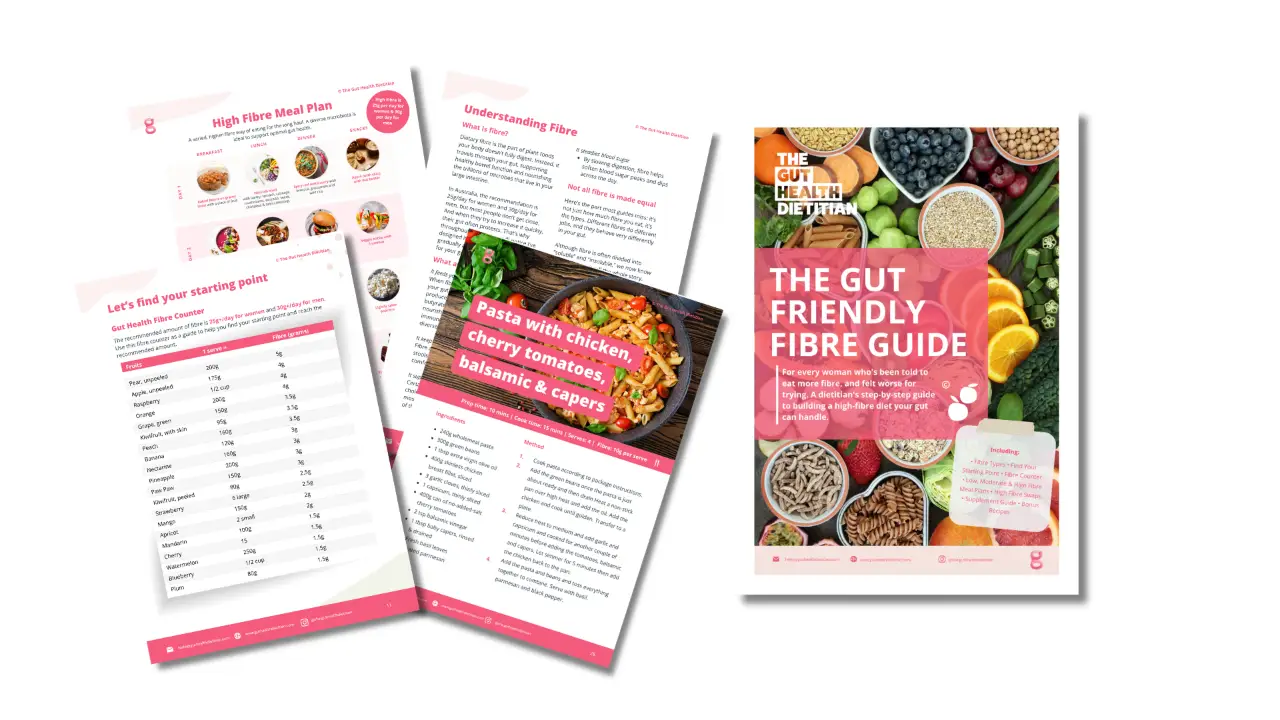
THE GUT FRIENDLY FIBRE GUIDE
An evidence-based guide for women to eat more fibre without making their gut feel worse
If eating more fibre has ever left you feeling worse, fibre probably wasn’t the problem. More likely, your gut just needed you to go slower.
This guide is based on the approach I use with women who want to eat more fibre without making their gut feel worse. We start with where you are now, then build from there slowly enough that your gut can keep up.
It’s food-first, weight-neutral and evidence-based, created by me and my team of Accredited Practising Dietitians.