Feeding Your Family (& Gut) on a Budget

Food prices have increased a lot over the past few years, and many women we work with, especially those with families, tell us they are feeling the squeeze. You want to feed your family well, support your own gut and hormone health, and keep meals satisfying, but you also need to make the budget stretch.
The good news is that eating in a way that supports gut health is naturally budget friendly. Fibre rich foods, legumes, wholegrains, seasonal produce, and frozen staples are some of the cheapest items in the supermarket. They are also the very foods that nourish your microbiome, stabilise blood sugar, and keep you fuller for longer.
This blog brings together practical, real life strategies to help you feed your family well without blowing the budget.
Myth: Eating Healthy Is More Expensive
Many women assume that healthy eating means pricey supplements, organic everything, or fancy specialty products. Research shows the opposite.
“Current Western diets are significantly more expensive than eating a nutritious and healthy diet.” “The average saving when swapping to a healthy diet ranges from $63 to $78 per week.”
When you move towards whole foods, especially fibre rich plant foods, your trolley total often drops.
Gut Friendly Foods Are Often the Cheapest Foods
Vegetables cost around $0.29 per serve, fruit $0.36, and grains $0.09. These foods are the backbone of gut supportive eating.
They help:
- support your gut microbiome
- regulate appetite and blood sugar
- reduce inflammation
- support hormone metabolism during perimenopause
And they are budget heroes.
Cost Comparisons
A few examples show how big the price gaps really are.
- Fresh potatoes: $3/kg
- Frozen chips: $4.30/kg
- Fast food chips: $29.50/kg
- Fresh chicken breast: $9/kg
- Pre crumbed tenders: $22.88/kg
Whole foods win every time, nutritionally and financially.
Practical Gut Health Strategies for Eating Well on a Budget
1. Edit Your Pantry
A clear, organised kitchen saves money because you stop re buying what you already have.
“If you cannot see it, you are probably not going to use it.”
Visible staples make it easier to build meals from oats, legumes, wholegrain pasta, canned tomatoes, and frozen veg.
2. Avoid Food Waste
Australia wastes $37 billion of food every year, and households are the biggest contributors.
Leftovers often contain fibre, legumes, veg, and wholegrains. Using them creatively boosts gut health and saves money.
Practical tips:
- Plan 3 to 4 dinners, not 7
- Build in leftover nights
- Freeze soups, curries, pasta sauces
- Keep a use me first container in the fridge
3. Choose Mostly Plant Based Meals
Legumes, wholegrains, veg, and tinned foods are:
- cheap
- filling
- gut friendly
- hormone supportive
- easy to store
Try:
- Lentil bolognese
- Chickpea curry
- Black bean tacos
- Pumpkin and white bean casserole
These meals cost a fraction of meat heavy dishes and deliver huge gut health benefits.
4. Buy Seasonal and Local
Seasonal produce is cheaper, fresher, and often higher in nutrients.
Seasonal rotation supports microbiome diversity.
5. Use Frozen and Canned Foods
Frozen veg, canned beans, tinned tomatoes, and tinned fish are gut health staples that cost less, last longer, and reduce waste.
6. Find Cheaper Healthy Swaps
Examples:
- Fresh beans: $1.36 per 100g
- Frozen beans: $0.22 per 100g
- Fancy hummus: $6.50 per tub
- Canned chickpeas: $0.80 per can
These swaps keep fibre high and cost low.
7. Cook in Bulk
Bulk cooking reduces cost per serve and creates gut friendly leftovers.
Think slow cooker Sunday with extra portions for the freezer.
8. Build Meals Using the Gut Health Plate
A simple, budget friendly model:
- Half plate veg
- Quarter plate high fibre carbs
- Quarter plate lean protein
- Add healthy fats
This supports blood sugar stability, satiety, inflammation reduction, and microbiome nourishment.
Cheap, Gut Friendly Meal Ideas
All aligned with the strategies above.
- Lentil bolognese
- Chickpea curry
- Veggie packed minestrone
- Black bean burritos
- Frozen veg stir fry with tofu or chicken
- Tuna and bean salad
- Slow cooker soups with barley or lentils
- Homemade pizza with lots of veg and beans
Final Thoughts
Feeding your family well on a budget does not require perfection, organic everything, or expensive health foods. It is about simple, gut friendly staples, reducing waste, and building meals around fibre, plants, and affordable proteins.
“Start with one thing.”
Small changes make a big difference for your gut, your hormones, your energy, and your grocery bill.
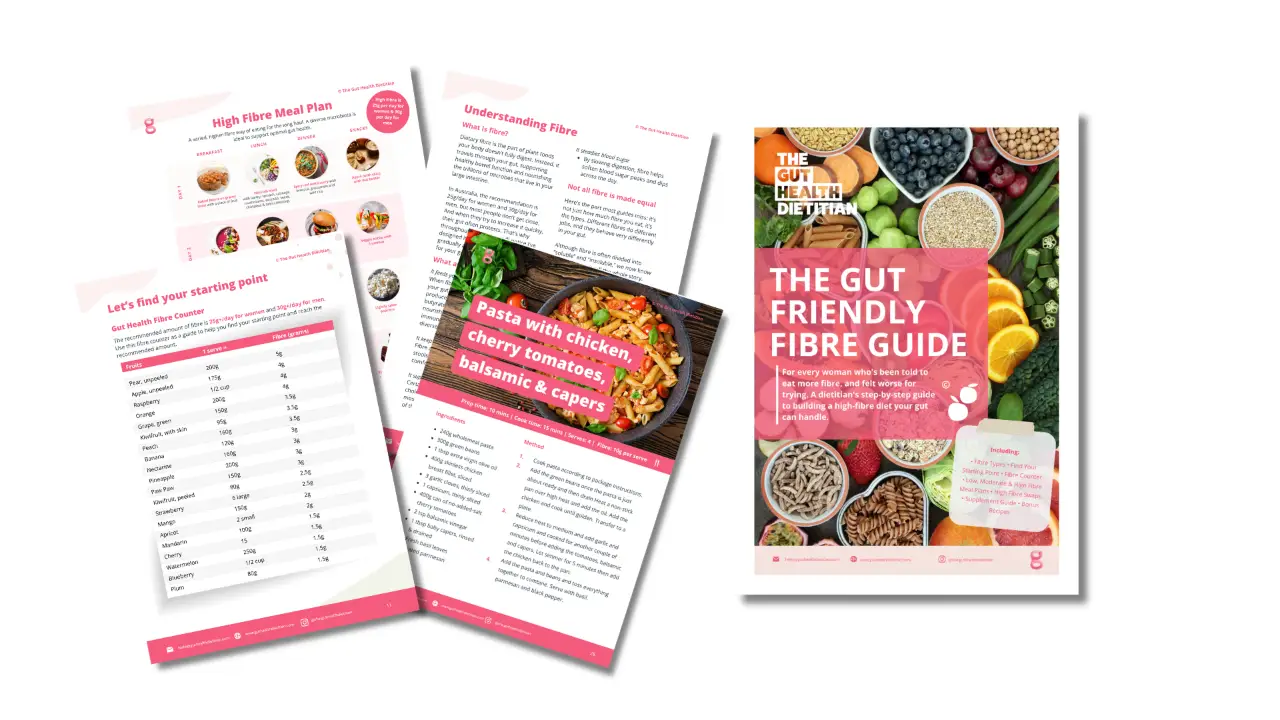
THE GUT FRIENDLY FIBRE GUIDE
An evidence-based guide for women to eat more fibre without making their gut feel worse
If eating more fibre has ever left you feeling worse, fibre probably wasn’t the problem. More likely, your gut just needed you to go slower.
This guide is based on the approach I use with women who want to eat more fibre without making their gut feel worse. We start with where you are now, then build from there slowly enough that your gut can keep up.
It’s food-first, weight-neutral and evidence-based, created by me and my team of Accredited Practising Dietitians.