Meal Planning for a Healthy Gut

Your nutritional choices largely affect the state of your gut. Whether you’re undertaking an elimination diet to identify food intolerances, trying to manage symptoms by having more home-cooked meals, or trying to improve your gut health by increasing your plant diversity – it’s going to be quite difficult to do so without a plan. If you’re not planning your meals (and hence, planning your nutrition) you can easily find yourself putting unbalanced meals together or opting for takeout foods, and in the process, hindering your gut health goals!
Creating your Meal Plan
Aiming for 30 types of a plants a week is an excellent goal for including a diverse amounts of plants in your diet to support gut health. Below are some of our top tips designed to help you include more diversity and gut-healthy foods into your diet. If you need help meal planning to cater to intolerances or to manage gut symptoms, don’t hesitate to get in touch to book in an appointment with one of our dietitians!
- Keep it simple with simple recipes that require few ingredients. No need to overcomplicate your meal plan, especially if you’re new to meal planning!
- Add your go-to recipes before adding new recipes. Are there any recipes that are trusted favourites? Add these ones to your plan first before finding new ones.
- When looking for new recipes, embrace your plant proteins to help you add more plants to your plan. Try doing Meatless Mondays and make a new vegetarian dish, like a lentil Bolognese, black bean burritos, or a tofu stir-fry.
- Keep a bank of recipes handy to save yourself time! This could be bookmarking them online, printing them out, or putting sticky notes in your cookbooks.
- Count your plants! If you’re falling short of your 30 weekly plants, consider ways you could add more variety to the meals you have chosen. This could include swapping products for ones that contain more plants (such as swapping a tin of black beans for a 4 bean mix, or swapping a spinach bag to a kale and spinach bag), stocking up on pantry items like pulses and tinned beans to add to sauce-based dishes like curries or pasta sauces, adding nuts and seeds to salads or yoghurt, and stocking up on frozen vegetables to add a side of extra veg to a meal.
- Consider convenient options. Sometimes Plan A doesn’t always go as planned. If you know you have a busy period coming up, or if some nights are busier than others, make a plan B! Frozen meals or meals utilising quick options (think: salad kits, steamed bags of vegetables, microwavable cups of rice) can help you make a plan that’s realistic for you.
A Final Word
No matter your gut health goals, meal planning and prepping can make all the difference when it comes to making last changes to your nutrition. If you need more help getting started, check out our free templates or book in an appointment with one of our dietitian for personalised guidance!
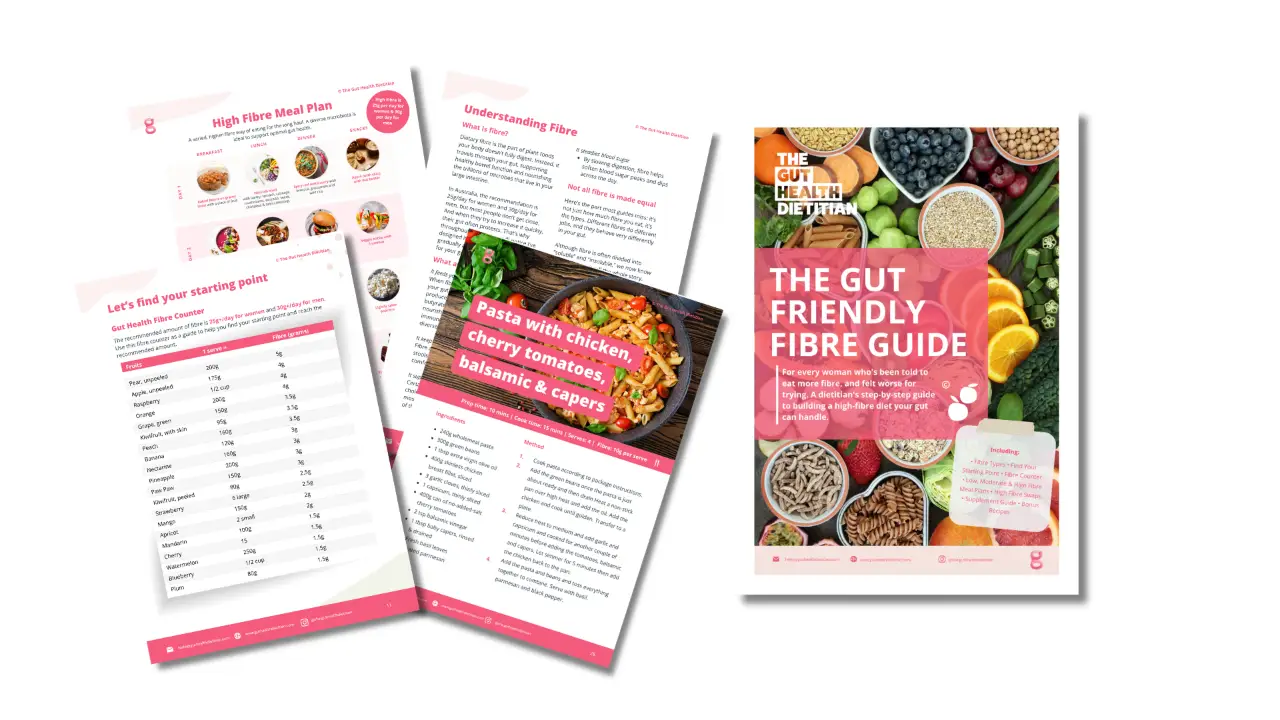
THE GUT FRIENDLY FIBRE GUIDE
An evidence-based guide for women to eat more fibre without making their gut feel worse
If eating more fibre has ever left you feeling worse, fibre probably wasn’t the problem. More likely, your gut just needed you to go slower.
This guide is based on the approach I use with women who want to eat more fibre without making their gut feel worse. We start with where you are now, then build from there slowly enough that your gut can keep up.
It’s food-first, weight-neutral and evidence-based, created by me and my team of Accredited Practising Dietitians.