The MIND Diet: Can What You Eat Protect Your Brain as You Age?
We tend to think about looking after our heart, bones and muscles as we get older. But what about our brain?
Most of us would love to keep our memory, focus and clear thinking for as long as possible. Dementia isn’t an inevitable part of ageing, and researchers are increasingly interested in how everyday habits, including what we eat, might shape how our brain ages.
One way of eating that’s getting a lot of attention is the MIND diet. You may have seen it described as a diet to prevent Alzheimer’s disease. So what does the research show, and is it worth paying attention to?
What is the MIND diet?
MIND stands for Mediterranean-DASH Intervention for Neurodegenerative Delay. It’s a mouthful, but the idea is simple. It combines the Mediterranean and DASH ways of eating, with extra focus on the foods most linked to brain health.
It puts the emphasis on:
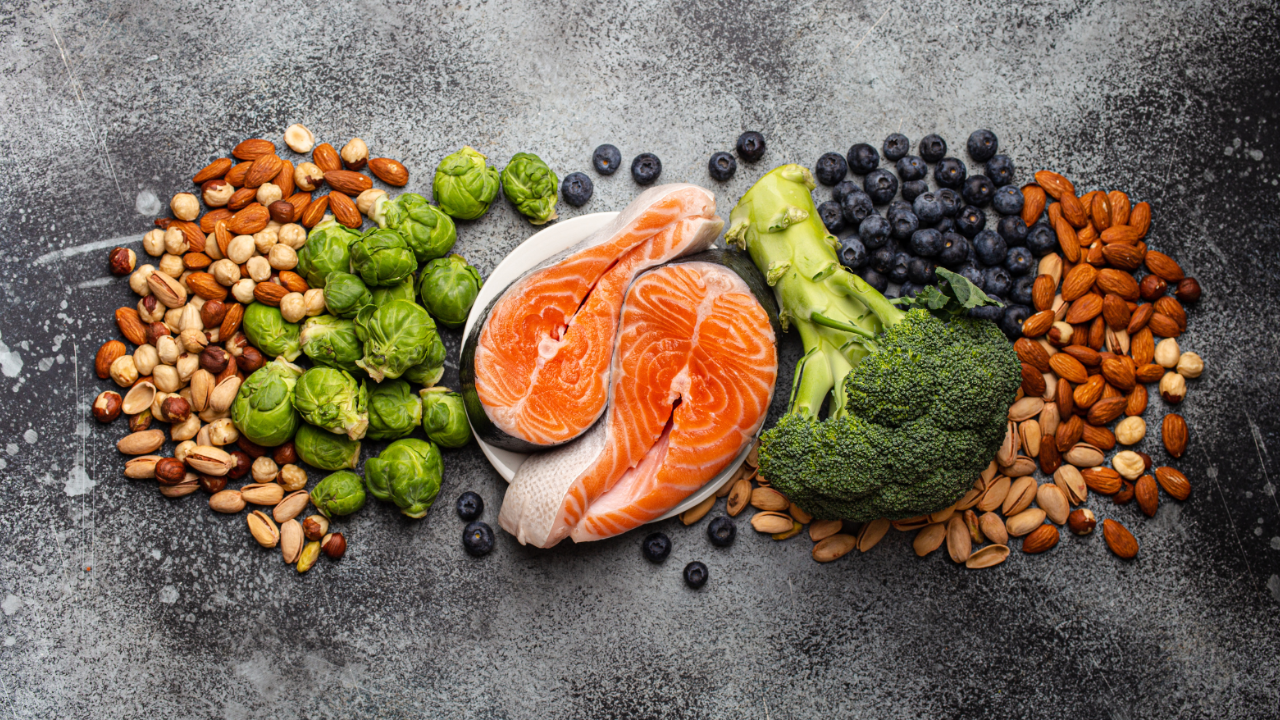
- vegetables, especially leafy greens
- berries
- wholegrains
- beans and other legumes
- nuts
- fish
- olive oil
It also suggests having less red and processed meat, butter, cheese, pastries, sweets and fried or fast food.
What does the research tell us?
The findings are promising, especially when it comes to dementia risk.
A 2025 review of cohort studies found that people whose eating most closely matched the MIND pattern had around a 22% lower risk of dementia than those whose eating matched it least.
Researchers think this may come down to the nutrients these foods provide. Berries and leafy greens bring antioxidants and other plant compounds, nuts and olive oil bring unsaturated fats, and fish brings omega-3s.
But there’s still a lot to learn. Studies like these show a link, but they can’t prove the food itself is responsible. In a three-year trial published in 2023, people following the MIND diet didn’t see significantly different changes in their thinking and memory compared with a control group. Both groups were supported to change their eating, and both improved, which makes the results harder to interpret.
So the evidence is encouraging, but not a done deal.
Where does fibre fit in?
Look at the MIND food list again and you’ll notice something. Leafy greens, berries, wholegrains, legumes and nuts are all great sources of fibre.
Fibre feeds the microbes in your gut, and those microbes make compounds that can travel around the body. Researchers are exploring how this gut-brain connection might affect brain health as we age. One large Japanese study found that people who ate more fibre, particularly soluble fibre, had a lower risk of developing dementia.
This is emerging science, so we can’t say fibre prevents dementia. But it’s one more good reason to keep adding plants to your plate.
Which foods are worth adding to your week?
Rather than treating the MIND diet as a strict set of rules, think about how you could add more of these foods to meals you already enjoy.
Leafy greens
Spinach, kale, rocket and silverbeet provide folate, vitamin K, carotenoids and other plant compounds, and leafy greens stand out in research on food and brain health. Stir spinach through scrambled eggs or pasta, or add a handful of rocket to your sandwich.
Berries
Blueberries, strawberries and other berries provide fibre and polyphenols called anthocyanins, which are being studied for their role in brain health. Add them to porridge, yoghurt or smoothies, and keep a bag of frozen berries in the freezer for easy mornings.
Wholegrains and legumes
Oats, wholegrain bread, brown rice, lentils, chickpeas and beans give you fibre and a range of nutrients. They also support heart and metabolic health, which matters for your brain as you age. Add lentils to soups and curries, toss chickpeas through a salad, or try wholemeal pasta next time. If legumes leave you bloated, start with a small serve of rinsed canned lentils or chickpeas and build up slowly.
Nuts, seeds and olive oil
Walnuts, almonds, chia seeds, linseeds and extra virgin olive oil bring unsaturated fats and other helpful nutrients. Sprinkle nuts and seeds over breakfast, use olive oil in your dressings, or keep a small container of nuts handy for a snack.
Fish
Oily fish like salmon and sardines provide omega-3 fats (EPA and DHA) and protein. The MIND guidelines suggest fish at least once a week, whether that’s a salmon dinner, sardines on wholegrain toast or tuna in a lunchtime salad.
No single superfood does the heavy lifting. It’s the overall pattern that counts: plenty of plants, wholegrains, healthy fats and a mix of proteins across your week.
Brain health goes beyond food
Food is an important part of healthy ageing, but it’s only one piece of the puzzle.
Your brain relies on a healthy blood supply, which is one reason heart health matters so much as you age. High blood pressure, diabetes, smoking and being inactive are all linked to dementia risk, so moving your body and managing any health conditions are part of the bigger picture.
Sleep and social connection matter too. Social isolation is one of the modifiable risk factors for dementia named by the Lancet Commission. Staying connected, learning something new and making time for things you enjoy all help keep your brain engaged.
This is where the Mediterranean lifestyle has something to teach us. It’s about more than olive oil and fish. Traditionally, it’s also about cooking, eating and spending time together. Sharing a meal with family or catching up with a friend over lunch makes good food more enjoyable, and gives you that connection at the same time.
No lifestyle can remove dementia risk completely. But looking at the bigger picture puts food in context, without placing all the responsibility on your plate.
Is it too late to start?
If you haven’t eaten particularly well for the past 20 years, you haven’t missed your chance.
We can’t say that changing the way you eat at a particular age will prevent dementia. But many of the factors linked to healthy ageing are worth working on at any stage of life, and there’s no reason to think they stop mattering after a certain birthday.
So rather than worrying about what you should have done years ago, focus on what feels doable now. Could you:
- add berries to breakfast a few mornings a week?
- put lentils or beans in your next soup or curry?
- choose wholegrain bread more often?
- cook with extra virgin olive oil?
- plan a meal to share with friends?
Small changes like these add up to a way of eating that supports your brain, heart and gut.
A final word
We still have a lot to learn about how food affects the ageing brain. But the MIND emphasis on vegetables, berries, wholegrains, legumes, nuts, fish and olive oil is a great place to start, and many of those foods are good for your gut too.
References
Barnes, L. L., Dhana, K., Liu, X., Carey, V. J., Ventrelle, J., Johnson, K., ... & Sacks, F. M. (2023). Trial of the MIND diet for prevention of cognitive decline in older persons. New England Journal of Medicine, 389, 602–611. https://doi.org/10.1056/NEJMoa2302368
Livingston, G., Huntley, J., Liu, K. Y., Costafreda, S. G., Selbæk, G., Alladi, S., ... & Mukadam, N. (2024). Dementia prevention, intervention, and care: 2024 report of the Lancet standing Commission. The Lancet, 404(10452), 572–628. https://doi.org/10.1016/S0140-6736(24)01296-0
Wang, Y., Lin, X., Cheng, L., Cheng, X., He, J., & Xia, S.-F. (2025). Dietary patterns and risk of dementia in elderly individuals: A systematic review and meta-analysis of cohort studies. Nutrition Reviews. https://doi.org/10.1093/nutrit/nuaf121
Yamagishi, K., Maruyama, K., Ikeda, A., Nagao, M., Noda, H., Umesawa, M., ... & Iso, H. (2023). Dietary fiber intake and risk of incident disabling dementia: The Circulatory Risk in Communities Study. Nutritional Neuroscience, 26(2), 148–155. https://doi.org/10.1080/1028415X.2022.2027592
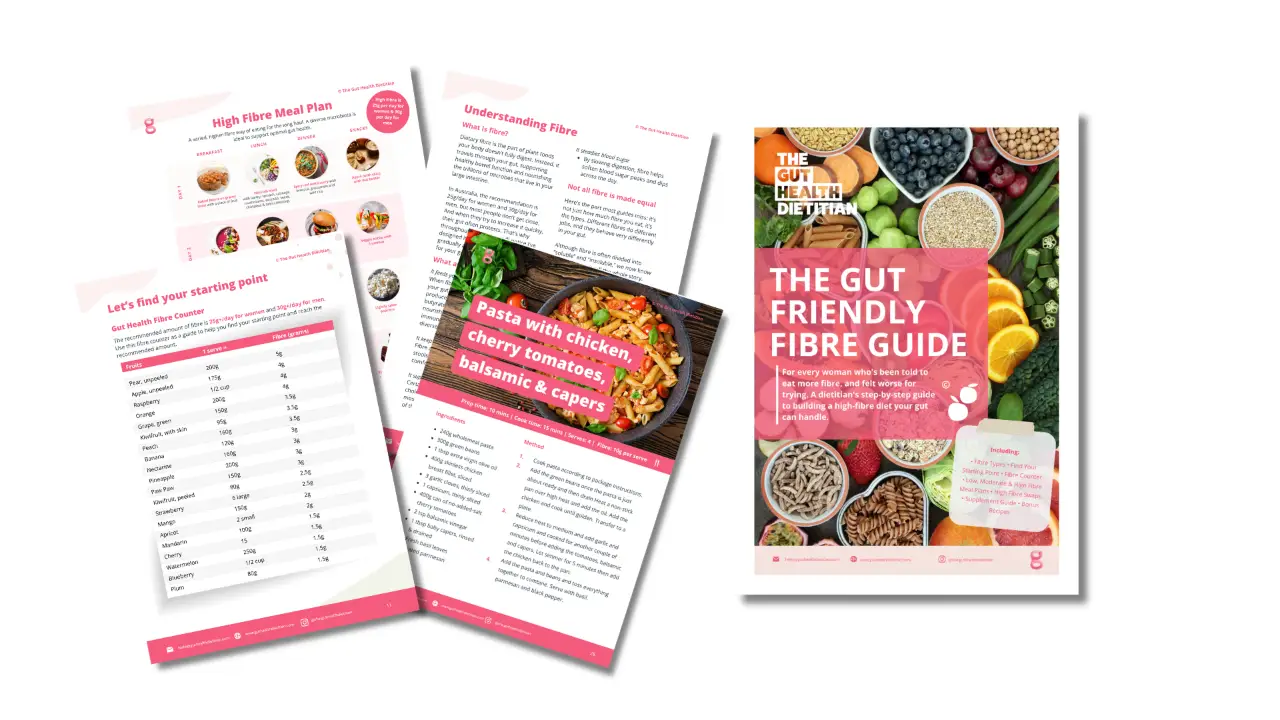
THE GUT FRIENDLY FIBRE GUIDE
An evidence-based guide for women to eat more fibre without making their gut feel worse
If eating more fibre has ever left you feeling worse, fibre probably wasn’t the problem. More likely, your gut just needed you to go slower.
This guide is based on the approach I use with women who want to eat more fibre without making their gut feel worse. We start with where you are now, then build from there slowly enough that your gut can keep up.
It’s food-first, weight-neutral and evidence-based, created by me and my team of Accredited Practising Dietitians.