Can What You Eat Affect Your Mood?
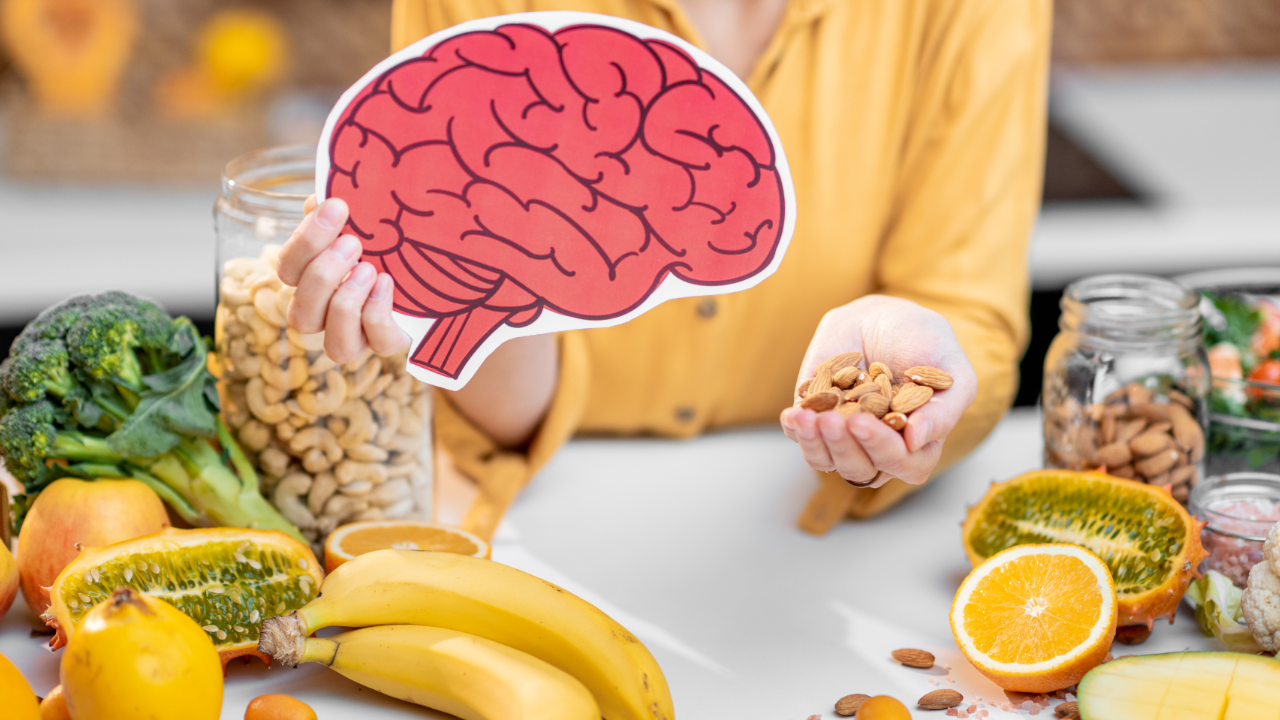
Have you ever made the connection between what you eat and how you feel? You might notice it with bloating or an afternoon energy slump, but it’s easy to overlook how food could be influencing your mood too.
And when you’re feeling flat or overwhelmed, deciding what to eat can take more effort than you have to give. You grab whatever’s easiest, or meals slip past altogether. It’s understandable, especially when you’ve got a lot going on.
This is one reason I find the relationship between food and mood so interesting. Understanding it gives you another way to support yourself, starting with the meals you already eat.
What did the SMILES trial find?
An Australian study called the SMILES trial helped bring this connection into focus.
Published in 2017, it involved 67 adults with moderate-to-severe depression. One group received dietary support from a dietitian, while the other received social support with a similar number and length of appointments.
After 12 weeks, the dietary support group had a significantly greater improvement in depressive symptoms. Around 32% of those assessed in this group reached remission, compared with 8% in the social support group. Remission meant their symptoms fell below the study’s threshold on a depression rating scale.
It was a small study, and many participants were also receiving other treatments. The findings support food as an additional way to care for your mental health alongside medication, counselling and other support.
That’s encouraging because it gives you something practical to work with.
What was on the menu?
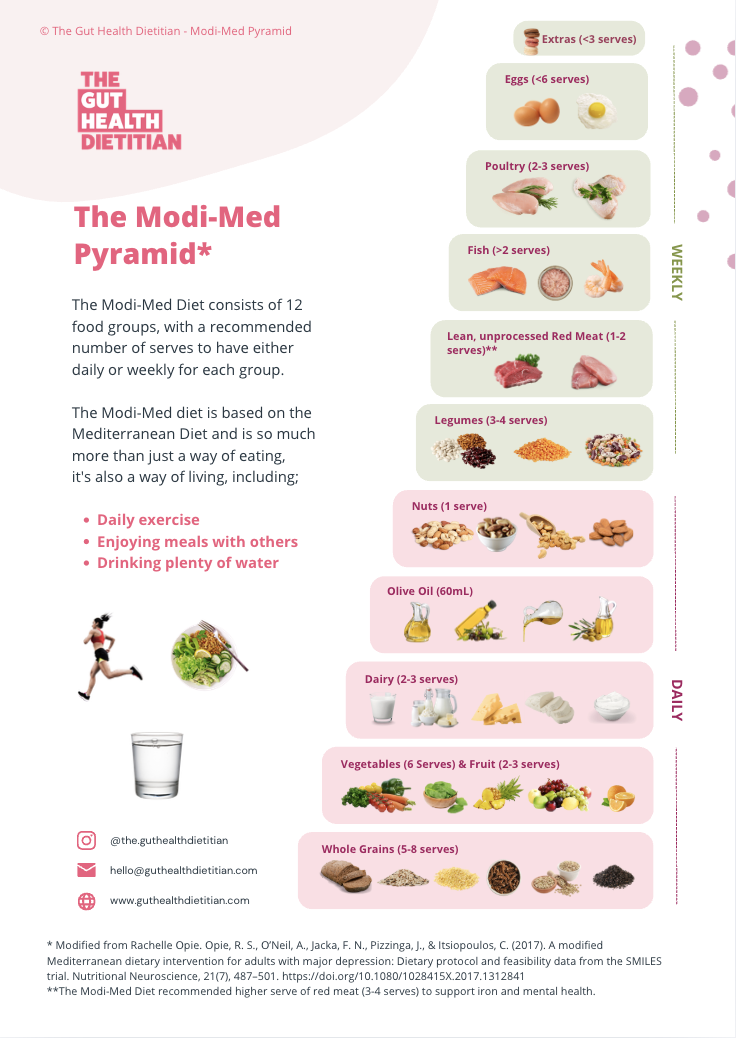
Participants followed a modified Mediterranean-style eating pattern, including vegetables, fruit, wholegrains, legumes, nuts, fish, lean proteins, dairy and olive oil. They also reduced discretionary foods and drinks, such as sweets, processed meats and sugary drinks.
The infographic below gives you a closer look at the eating pattern.
What appeals to me is how familiar these foods are. You can start with things you already enjoy and find a few ways to include them more often.
Where does your gut come into it?
Your gut and brain communicate with each other, and your gut microbes are involved in that conversation. What you eat can influence those microbes and the compounds they produce, which may affect processes involved in brain health and mood.
Researchers are still working out how much of the relationship between food and mental health happens through the gut. It’s a promising area, with plenty still to learn.
For you, a useful place to start is thinking about how you’re feeding your gut microbes. Vegetables, fruit, legumes, wholegrains, nuts and seeds offer different fibres and plant compounds for them to work with.
That could look like oats with berries for breakfast, chickpeas stirred through a salad, or a sprinkle of nuts and seeds over your yoghurt. Familiar foods, with a little more variety.
Start with something you can add
When you’re already feeling stretched, a complete overhaul of your eating habits can feel like a lot. I’d rather help you find a few additions you can keep coming back to.
Have a look at a meal you eat regularly. Could you:
-
Add berries or a spoonful of seeds to breakfast?
-
Stir a little lentil or chickpea goodness into a soup, curry or pasta sauce?
-
Try wholegrain bread with your usual toast toppings?
-
Add some frozen vegetables to dinner?
-
Use extra virgin olive oil on your salad or vegetables?
Pick the one that sounds easiest. If you’re increasing fibre, build up low and slow and drink water regularly, so you can find an amount your gut feels comfortable with.
There’s still room for chocolate, takeaway and the foods you eat simply because you enjoy them. What you do most of the time makes the difference.
How strong is the evidence?
The SMILES trial helped open the door to more research. A later review of five randomised controlled trials found that Mediterranean-style dietary interventions could reduce depressive symptoms.
The results varied considerably between studies, though, and the researchers rated the certainty of the evidence as low. Larger, longer studies will help clarify who benefits and how best to provide support.
I find that encouraging while recognising how much goes into mental health. Your sleep, stress, relationships, circumstances and access to care all deserve attention too. Food gives you another practical way to support yourself.
What could this look like on your plate?
You can keep it fairly simple:
-
Include a variety of plants: vegetables, fruit, wholegrains, legumes, nuts and seeds.
-
Add a protein source you enjoy: eggs, yoghurt, tofu, fish, chicken or legumes.
-
Include fats such as olive oil, nuts, seeds, avocado and oily fish.
-
Choose meals you look forward to eating. Enjoyment helps you keep coming back to them.
You might already be doing plenty of this. If so, look for a little extra variety rather than assuming you need to start again.
Try the 30 Plants Challenge
If you enjoy a challenge, see how many different plant foods you eat over a week.
Count vegetables, fruit, wholegrains, legumes, nuts, seeds, herbs and spices. Your oats count, along with the blueberries, chia seeds, cinnamon and almonds you add. So do the lentils in your soup and the herbs in your salad.
Use 30 as something to aim towards if it feels helpful. It’s a prompt to explore variety, rather than a score you need to pass, and it isn’t an established target for improving mood.
You might discover you’re eating more variety than you thought, or find a few easy additions you’d like to try.
Something to try this week
Think about one meal you eat often and choose something you could add to it. Perhaps it’s berries on breakfast, chickpeas in lunch or another vegetable with dinner.
Give yourself time to make it familiar. Feeding yourself consistently, including foods you enjoy and looking after your gut are useful foundations to build on.
References
Jacka FN et al. A randomised controlled trial of dietary improvement for adults with major depression (the SMILES trial). BMC Medicine. 2017;15:23.
Bizzozero-Peroni B et al. The impact of the Mediterranean diet on alleviating depressive symptoms in adults: a systematic review and meta-analysis of randomized controlled trials. Nutrition Reviews. Published online 2024;83(1):29–39, 2025.
Schneider E et al. Feeding gut microbes to nourish the brain: unravelling the diet-microbiota-gut-brain axis. Nature Metabolism. 2024;6:1454–1478.
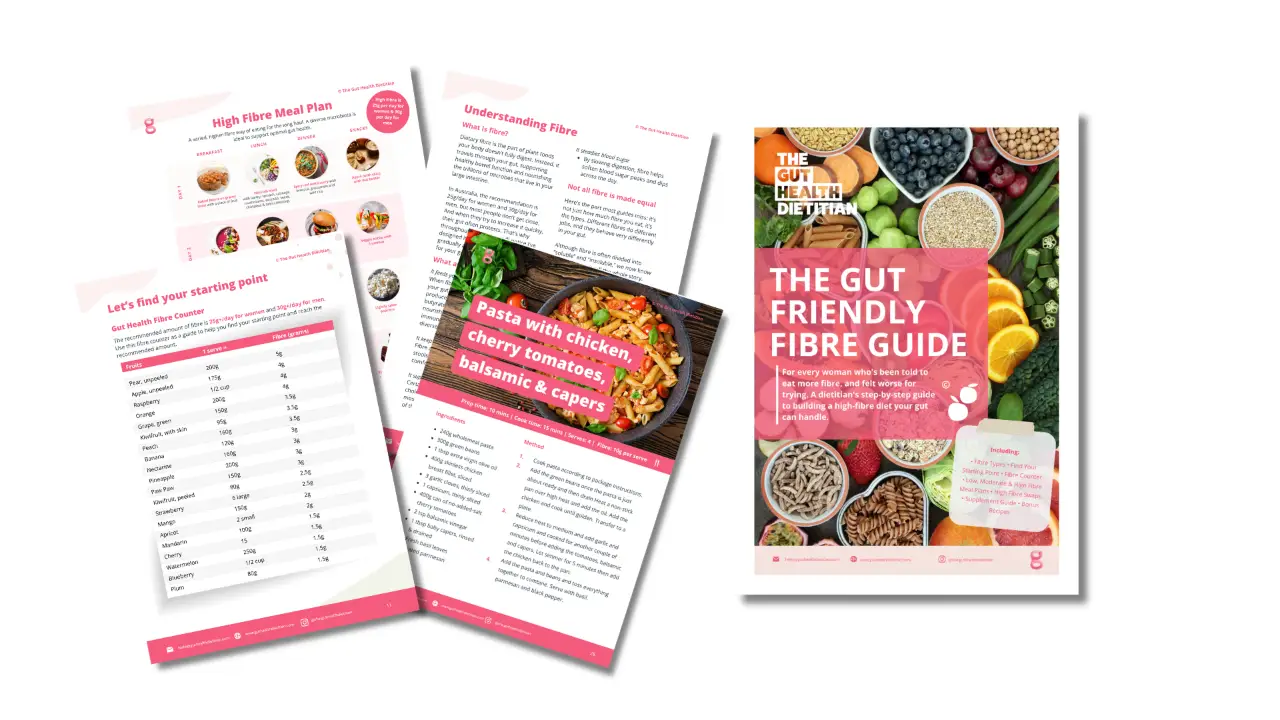
THE GUT FRIENDLY FIBRE GUIDE
An evidence-based guide for women to eat more fibre without making their gut feel worse
If eating more fibre has ever left you feeling worse, fibre probably wasn’t the problem. More likely, your gut just needed you to go slower.
This guide is based on the approach I use with women who want to eat more fibre without making their gut feel worse. We start with where you are now, then build from there slowly enough that your gut can keep up.
It’s food-first, weight-neutral and evidence-based, created by me and my team of Accredited Practising Dietitians.