When you don’t feel like yourself in perimenopause and menopause

Have you found yourself close to tears over something that wouldn’t normally bother you? Or lost patience with someone, then wondered where that came from?
I hear this from women going through perimenopause and menopause. They might feel more anxious or irritable, struggle to concentrate, or find that everyday things are getting to them more than they used to. It can be unsettling when you don’t quite feel like yourself, especially if you’re not sure why it’s happening.
What’s going on with your hormones?
Oestrogen acts on parts of the brain involved in mood. During perimenopause, its levels can rise and fall quite a lot, and some women appear to be more sensitive to those changes than others. Hot flushes, night sweats and broken sleep can make a hard week feel harder, too.
That doesn’t mean every change in mood is caused by hormones. Work, relationships, caring for other people and your own health all have an impact. These feelings can continue after menopause, so it’s worth paying attention to how you’re feeling at any stage.
Here are a few things that may help.
1. When you’re about to lose your patience
The kitchen bench is covered in stuff, your phone is going off and someone asks what’s for dinner while you’re trying to finish something else. Suddenly, you’ve had enough of everyone.
If you can, say, “Give me a minute,” and step away before you answer. Take a breath, stretch your shoulders or go outside for a moment. The kitchen will still need sorting out, but you might find it easier to come back to it once you’ve had a little space.
2. Get outside in the morning
Morning light helps your body keep track of when it’s time to be awake and when it’s time to sleep. I’m a big fan of getting outside soon after I wake up, especially when my sleep hasn’t been great.
Most mornings, I step onto my bedroom balcony and take in the light, often while the sun is coming up. Your version could be drinking your coffee outside or spending a few minutes in the garden before you start work. It’s worth trying if the day usually begins with you rushing straight into everything.
3. Eat regularly, even when you’re busy
It’s easy for lunch to disappear when you have back-to-back meetings or a long list of things to do. Then you get to mid-afternoon feeling hungry, flat and wondering why you can’t concentrate.
If that sounds familiar, think about what would make eating during the day easier. It might be keeping leftovers for lunch, making a wrap or having yoghurt, oats and berries ready for breakfast. I like including protein and fibre in meals because they help make them more satisfying, and it’s a simple place to start if you’ve been eating on the run.
4. Talk to someone you trust
When you’re feeling low or overwhelmed, you might be tempted to keep it to yourself, especially if you can’t quite explain what’s wrong. You don’t need to have that worked out before you reach out.
Message a friend, arrange a walk or tell someone close to you that you’ve had a hard day. Sometimes a conversation with someone who knows you is exactly what you need.
5. Move to clear your head
A walk helps me when I’ve spent too long sitting and thinking, and yoga takes the edge off my busy brain. I don’t always make time for it as often as I’d like, but I notice the difference when I do.
You might feel the same after a walk, a strength session, Pilates or a few minutes of stretching. Think about the kind of movement you enjoy and how you feel afterwards, particularly on the days when your head feels full.
6. Pay attention to your gut
Stress can affect your digestion, and bloating or constipation can make an already difficult day more uncomfortable. Your gut and brain communicate with each other, although there’s still plenty we’re learning about how that works.
If your gut has been feeling off, have a look at the basics. Are meals happening regularly? Are you drinking enough water? Could you add a fibre-rich food you enjoy? If you’re increasing fibre, go low and slow so your gut has time to adjust.
A few things to try on a hard day
Here are some practical ways to support your mental wellbeing, especially on days that feel hard or overwhelming:
- Feeling anxious? Try a 2‑minute breathing exercise or grounding technique.
- Low mood? Step outside for morning light, even for one minute.
- Brain fog? Eat balanced meals and reduce long gaps between eating.
- Feeling disconnected? Send one message to someone you trust or plan a walk together.
- Overwhelmed? Choose one tiny task and complete it, momentum helps.
- Stress building? Stretch your upper back and chest; it helps release tension.
- Emotionally flat? Add one enjoyable sensory input: music, sunlight, scent, warmth.
- Busy brain? Write down tomorrow’s tasks before bed.
- Low motivation? Start with the smallest possible step: one breath, one minute, one action.
When to ask for help
If anxiety or low mood keeps coming back, feels intense or is affecting your daily life, talk with your GP. You deserve help understanding what’s going on, whether it’s related to perimenopause, menopause, poor sleep or something else.
If you’d like someone to talk to, Beyond Blue offers free phone and online counselling.
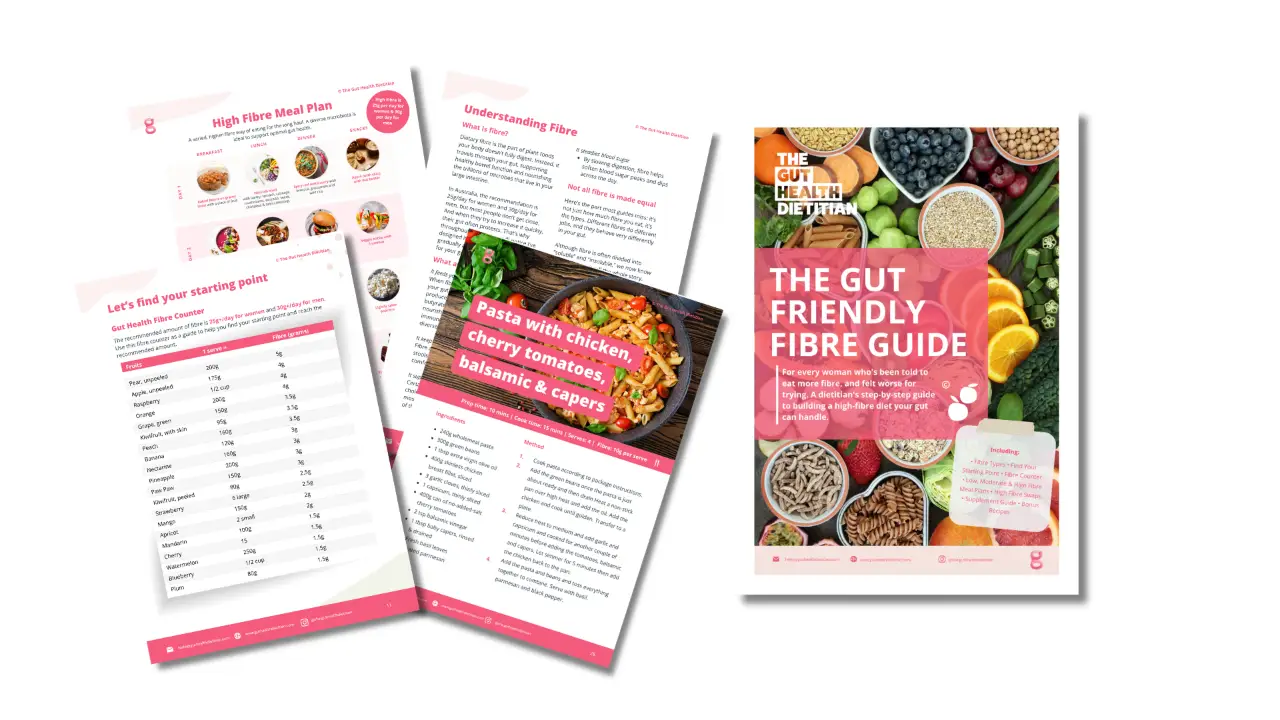
THE GUT FRIENDLY FIBRE GUIDE
An evidence-based guide for women to eat more fibre without making their gut feel worse
If eating more fibre has ever left you feeling worse, fibre probably wasn’t the problem. More likely, your gut just needed you to go slower.
This guide is based on the approach I use with women who want to eat more fibre without making their gut feel worse. We start with where you are now, then build from there slowly enough that your gut can keep up.
It’s food-first, weight-neutral and evidence-based, created by me and my team of Accredited Practising Dietitians.