Menopause and Iron: Too Little, Too Much, or Just Right?
Iron and Menopause: Finding the Balance
Iron is essential for energy, cognition, and overall health, but when it comes to menopause, getting the balance right can feel tricky. Both too little and too much iron can have consequences, so understanding your needs during perimenopause and post-menopause is crucial: especially because requirements differ.
Perimenopause: At Higher Risk of Iron Deficiency
Perimenopause can be a challenging time for iron status. Many women experience heavy or irregular menstrual bleeding, which increases iron loss. Studies suggest that:
-
Around 40% of non-pregnant reproductive-aged women have low iron stores.
-
Iron deficiency and anaemia are common but often under-diagnosed in this group, contributing to fatigue, brain fog, reduced immunity, and lower work capacity.
-
Average menstrual iron losses adds roughly ~1 mg/day, and heavy periods can significantly raise the risk of deficiency.
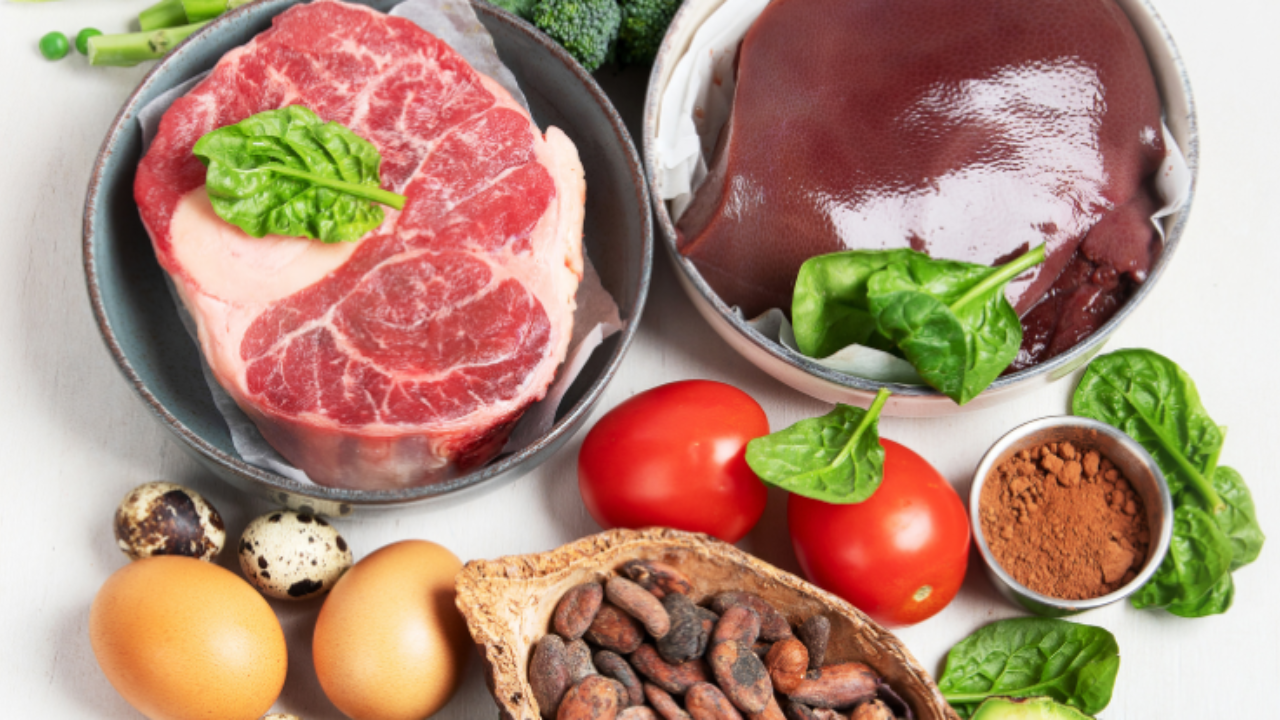
Dietary intake also plays a role. Women with low intake of iron-rich foods, especially heme iron from meat, are more prone to deficiency. Maintaining adequate iron during perimenopause supports energy, mood, and cognitive function, and in some cases, iron supplementation may help alleviate fatigue and “brain fog.”
If you’re perimenopausal and experiencing heavy or irregular periods, monitoring iron through blood tests and ensuring sufficient dietary iron is important. Supplements or possibly iron infusions may be necessary if deficiency is confirmed.
Menopause: The Risk Changes
Once menstruation stops, iron loss drops significantly. This change often improves iron status, but it also introduces a new concern: iron overload. Research shows that ferritin and other iron markers can rise 2-3 times after menopause, which is linked to:
-
Metabolic syndrome and fatty liver
-
Type 2 diabetes
-
Cardiovascular disease
High iron stores contribute to oxidative stress and inflammation, which is why routine iron supplementation in postmenopausal women is generally not recommended unless tests show deficiency.
What does this mean?
Dietary needs are lower after menopause, and most women can meet them with a balanced diet including some heme‑iron sources while avoiding strong absorption inhibitors at the same time. Supplements are only advised when tests indicate deficiency, as excessive iron can increase long-term disease risk. However, not all post-menopausal women have high iron, issues like malabsorption, ongoing bleeding, or low intake can still cause deficiency!
Balancing Iron Around Menopause
The main principle is “enough, but not too much.”
-
Perimenopause: High risk of deficiency due to heavy bleeding: monitor iron status and treat deficiencies to protect energy, mood, and cognitive performance.
-
Post-menopause: Iron requirements decrease, and stores naturally rise, so focusing on dietary balance and avoid unnecessary supplementation.
Blood tests (ferritin, haemoglobin, and other iron indices) are the most reliable way to determine your needs. Working with a healthcare professional can help you stay in the safe range, supporting energy and cognition without increasing long-term health risks.
A Final Word
Iron is a delicate balancing act during the menopause transition. Knowing your stage, monitoring your levels, and adjusting intake carefully can help you feel your best while protecting your long-term health.
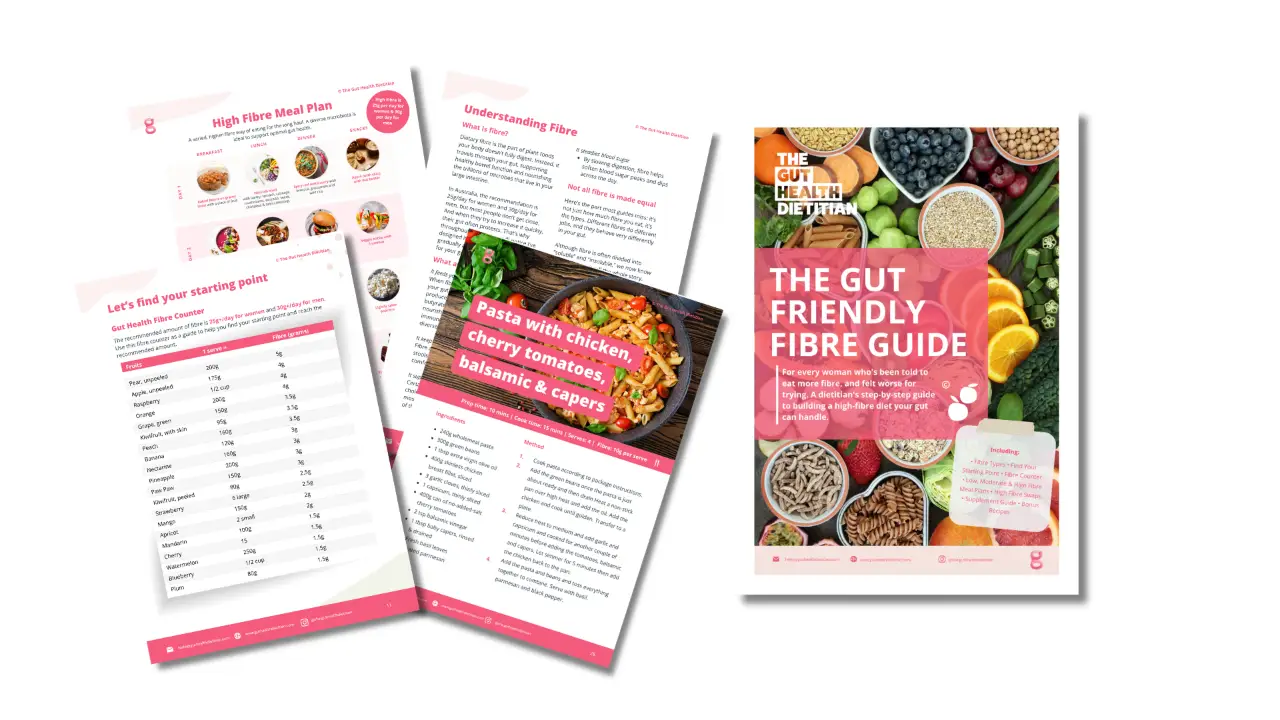
THE GUT FRIENDLY FIBRE GUIDE
An evidence-based guide for women to eat more fibre without making their gut feel worse
If eating more fibre has ever left you feeling worse, fibre probably wasn’t the problem. More likely, your gut just needed you to go slower.
This guide is based on the approach I use with women who want to eat more fibre without making their gut feel worse. We start with where you are now, then build from there slowly enough that your gut can keep up.
It’s food-first, weight-neutral and evidence-based, created by me and my team of Accredited Practising Dietitians.