New Year Habit Change: Observe Before You Act

Last week, we focused on picking your first micro-habit and starting to track it, a huge first step toward building routines that support your gut health, energy, and wellbeing. Now, in Step Two, we step back and observe the habits you already have, especially those on autopilot. Perhaps you've done some reflecting on these habits at the end of the year, but if not, now is an excellent time to do it. Awareness is the foundation for sustainable habit change, particularly during perimenopause when hormonal shifts can influence appetite, digestion, sleep, and mood.
Why observation matters
Even small, automatic habits like snacking while cooking, scrolling on your phone before bed, or pouring that second glass of wine can impact your digestion, energy, and mood. If you jump straight into action without noticing your patterns, it’s easy to rely on willpower, which is fleeting, rather than creating habits that last.
Dr. Gina Cleo, in The Habit Revolution, emphasises that getting curious about your habits is the first step to lasting change. Noticing the cue, the behaviour, and the reward behind each habit gives you insight, power, and flexibility, without judgment or guilt.
Cue Monitoring in Practice
Every habit operates in a loop:
-
Cue: What triggers the habit? (time, place, emotion, or routine)
-
Behaviour: The automatic action you do.
-
Reward: The need it satisfies (comfort, distraction, energy, pleasure).
Example: After cooking dinner (cue), you reach for a snack (behaviour) to satisfy boredom or stress (reward). Simply noticing this loop is the first win, it allows you to start designing habits that actually support you instead of working against you.
Here's how to observe:
-
Choose one habit to observe: something that happens automatically.
-
Track it for a few days:
-
What triggers it?
-
What behaviour follows?
-
What reward does it provide?
-
A Quick Tip:
During perimenopause, hormone fluctuations can affect hunger, cravings, and digestion. Observing patterns is especially powerful now, such as understanding why a craving hits, or when your energy drops, gives you the chance to respond thoughtfully rather than react automatically.
A Final Word
Step Two is all about curiosity and observation. Last week you picked a habit, this week, you’re noticing patterns, triggers, and rewards. Awareness is the first step toward intentional change. Once you see your habits clearly, you can start making small, mindful adjustments that support gut health, energy, and overall wellbeing (no willpower required)!
Over the coming weeks, we’ll continue outlining practical habit-change principles in this blog series to help set you up for long-term success, so don't forget to check back.
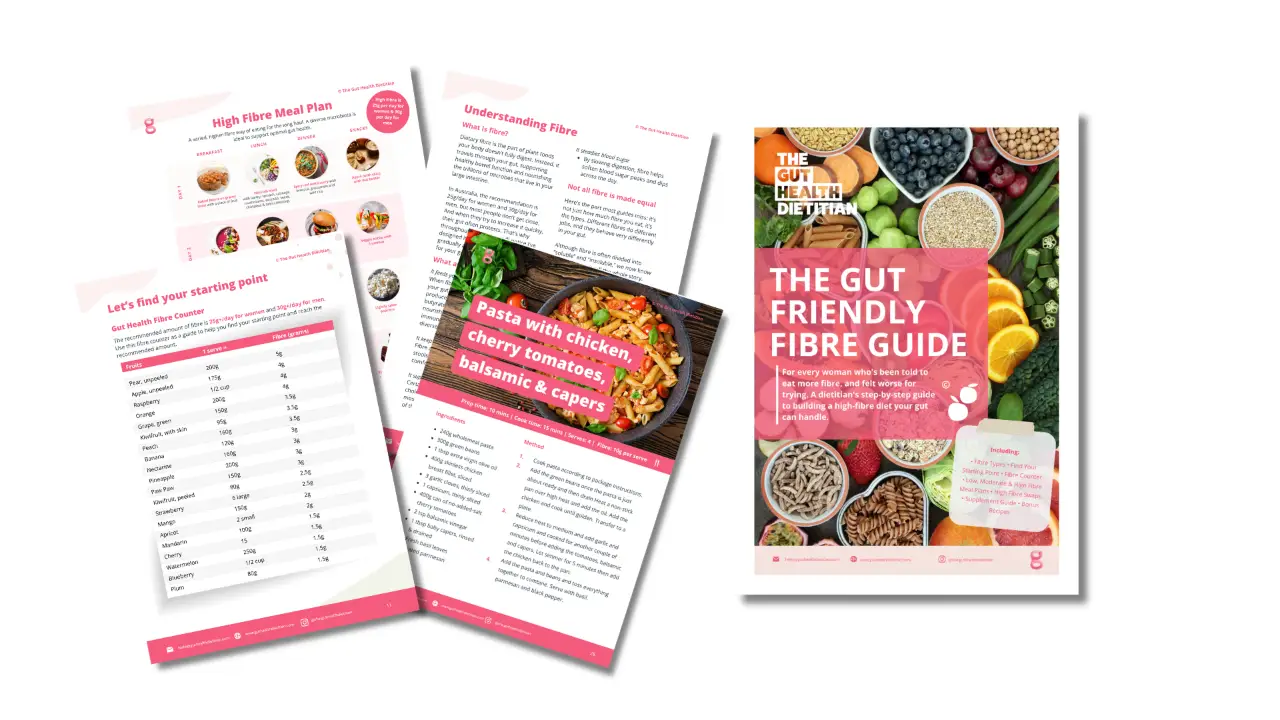
THE GUT FRIENDLY FIBRE GUIDE
An evidence-based guide for women to eat more fibre without making their gut feel worse
If eating more fibre has ever left you feeling worse, fibre probably wasn’t the problem. More likely, your gut just needed you to go slower.
This guide is based on the approach I use with women who want to eat more fibre without making their gut feel worse. We start with where you are now, then build from there slowly enough that your gut can keep up.
It’s food-first, weight-neutral and evidence-based, created by me and my team of Accredited Practising Dietitians.