Protein Alone Isn’t Enough: What Midlife Women Need to Know
Perimenopause is a time when a lot is changing in the body, even if it doesn’t always feel obvious. While we often focus on changes to periods and hormones, bone and muscle health can start to change during this stage too.
As oestrogen declines, your body becomes less efficient at absorbing calcium and tends to lose more of it. Bone breakdown increases, and muscle mass gradually starts to decline. You won’t notice this day to day, but over time it can affect strength, balance and fracture risk.
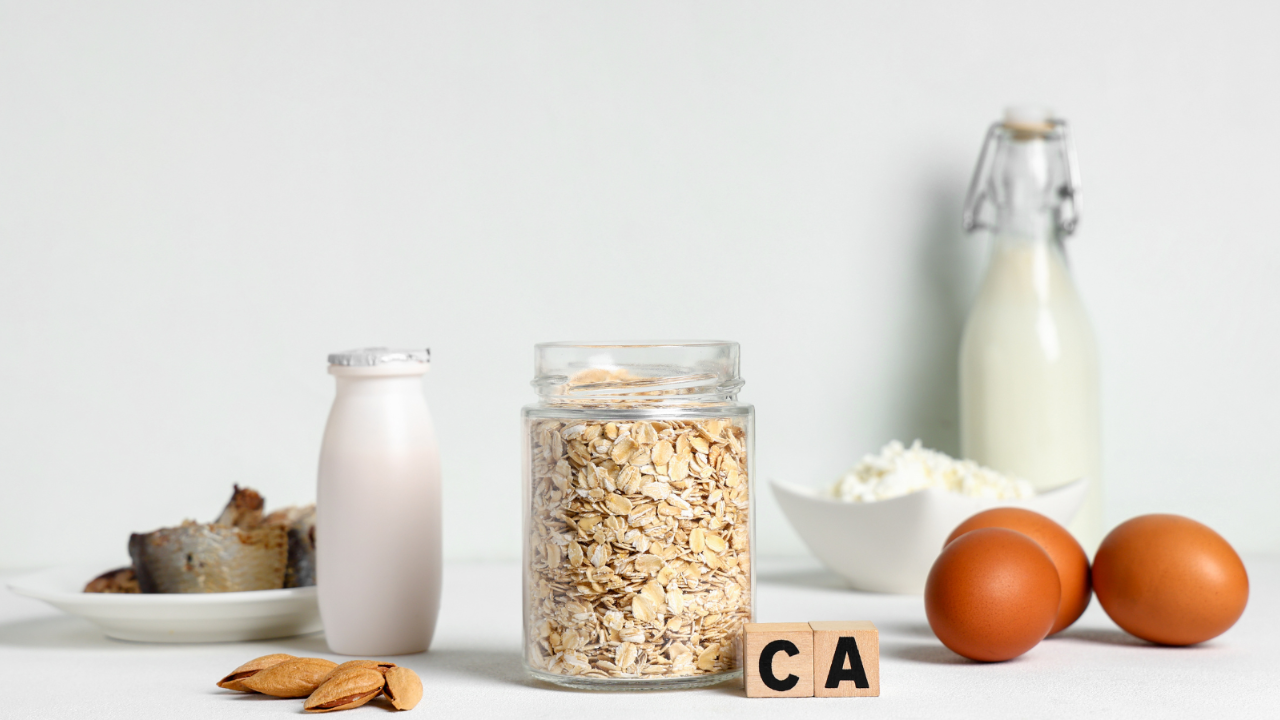
This is where calcium and protein come into the picture. Not as nutrients to track necessarily, but as part of a practical approach to supporting bone, muscle and overall function as your body changes.
Why bone and muscle loss can speed up in perimenopause
Oestrogen plays an important role in keeping bones strong. As levels decline, bone breakdown tends to increase, calcium balance becomes less efficient, and bone density can drop more quickly.
At the same time, many women aren’t getting quite enough of the nutrients that support bone and muscle. Calcium intake is often below recommendations, and protein intake can be borderline, especially if appetite changes or meals become lighter. Over time, this combination can increase the risk of bone loss and fractures.
How protein and calcium work together
Protein and calcium don’t work in isolation. They rely on each other.
Protein provides the framework that bone is built on. Calcium hardens that framework and gives bone its strength. If protein intake is too low, that structure isn’t well supported. If calcium intake is too low, the structure doesn’t fully harden.
Research consistently shows that higher protein intake supports bone health when calcium intake is adequate. When protein intake is high but calcium intake is low, calcium losses can increase and bone density may be affected. Calcium alone, without enough protein, also doesn’t offer full protection.
The simplest way to think about it is that protein helps bones only when calcium is there too. They work best as a pair.
Where gut health fits in
Calcium and vitamin D are absorbed in the gut, so gut health plays a role in how well your body uses them. There’s also growing evidence that the gut microbiome may influence inflammation and bone turnover.
Changes in hormones during perimenopause can affect digestion and the gut environment. Protein intake also depends not just on how much you eat, but how well you digest and absorb it. Supporting gut health through fibre, plant variety, good-quality protein and regular meals may help your body make better use of these nutrients.
How much protein do you need?
Protein becomes more important during perimenopause as muscle mass naturally declines.
As a general guide:
-
If you’re lightly active, around 1.0-1.2g per kg of body weight per day is a good target.
-
If you’re active or doing resistance training, that may increase to 1.4-1.8g per kg per day, and up to around 2.0g per kg if well tolerated.
It also helps to spread protein across the day. Aim for roughly 20-30g per meal using foods like dairy, eggs, lean meats, soy and legumes. A mix of plant and animal protein works well for most women.
Within these ranges, higher protein intakes are linked to better strength, improved physical function and better preservation of muscle and bone over time.
A quick word on exercise
Nutrition provides the building blocks, but exercise tells the body what to do with them.
Resistance training and weight-bearing activity help signal the body to keep bone and muscle. Without that stimulus, even good nutrition can only do so much. Useful options include resistance training, loaded Pilates, walking, jogging, stair climbing and, where appropriate, impact activities.
What this means for you
-
Aim for around 1,000-1,300mg of calcium each day from food, (or with the help of supplements if recommended by your doctor or dietitian).
-
Support vitamin D with safe sun exposure and testing if needed.
-
Prioritise protein, aiming for at least 1.0-1.8 g per kg per day, depending on your activity level.
-
Remember that protein works best when calcium intake is adequate.
-
Spread protein across meals rather than loading it into one sitting.
-
Pair nutrition with regular resistance and weight-bearing exercise.
A final thought
During perimenopause and menopause, protein and calcium work best together. When combined with vitamin D and regular movement, they support stronger bones, better muscle preservation and long-term physical confidence.
Rather than focusing on single nutrients, think about how they work together to support the body you want to live in for the long term.
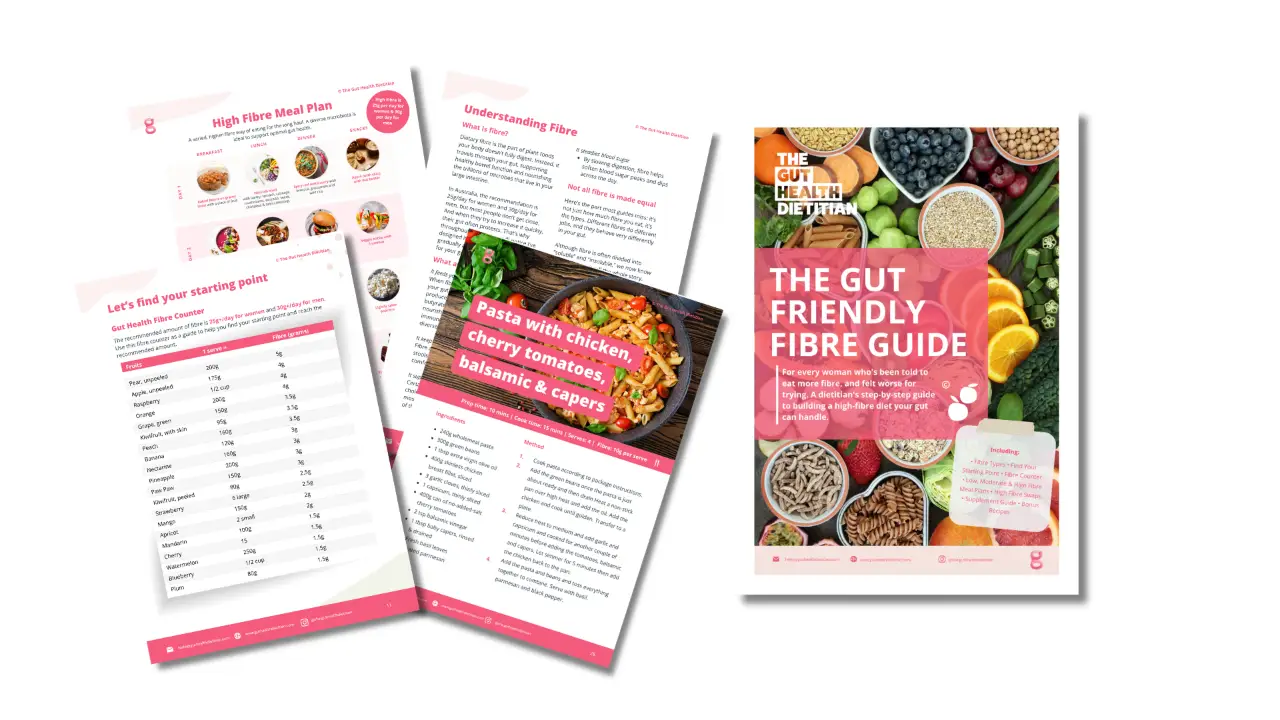
THE GUT FRIENDLY FIBRE GUIDE
An evidence-based guide for women to eat more fibre without making their gut feel worse
If eating more fibre has ever left you feeling worse, fibre probably wasn’t the problem. More likely, your gut just needed you to go slower.
This guide is based on the approach I use with women who want to eat more fibre without making their gut feel worse. We start with where you are now, then build from there slowly enough that your gut can keep up.
It’s food-first, weight-neutral and evidence-based, created by me and my team of Accredited Practising Dietitians.