If your IBS has suddenly flared in your 40s… it’s not you, and it’s not just the food

If your IBS has suddenly flared in your 40s… it’s not you, and it’s not just the food
Ever noticed your gut reacting in ways it never used to, especially before your period, after a bad night’s sleep, or when life is busy?
Maybe you’ve gone back to eating “safe” foods, or pulled the low FODMAP list out again, but things are still inconsistent. You could be more bloated, your bowels feel slower or stuck and foods you’ve eaten for years suddenly feel problematic.
And you’re probably thinking, “How can this be IBS when nothing in my diet has changed?”
Sorry to be the barer of bad news:
When you hit perimenopause, your gut doesn’t work the same way it used to, not because it’s “broken,” but because your hormones, gut motility, stress response, and microbiome are changing at the same time.
So yes, IBS or gut symptoms can absolutely feel worse in your 40s.
But no, the answer isn’t to cut out more and more foods.
Why symptoms change
Oestrogen and progesterone don’t just affect periods and mood, they also talk directly to the gut.
During perimenopause, those hormones start fluctuating wildly (you’ve likely heard of the ‘Zone of Chaos’), and the gut reacts by:
- Slowing down (you feel constipated and look pregnant after lunch with bloating)
- Becoming more sensitive (the same amount of gas now feels painful)
- Changing the microbiome (less diversity = more symptoms)
- Responding more to stress, fatigue and skipped meals
So the problem often isn’t the food itself, it’s the new gut environment the food is landing in.
Signs your gut is changing in perimenopause
You may be in the peri-IBS zone if:
- You’re more constipated than you used to be
- You feel bloated after smaller meals
- You get flare-ups around hormone changes (period week, ovulation, pre-period)
- Stress goes straight to your stomach
- You’ve already “fixed” your diet, but still feel uncomfortable
- Low FODMAP helped once, but doesn’t anymore
None of this means you’re doing something wrong.
It just means the gut you had at 32 is not the same gut you have at 45.
Why “just cut out more foods” backfires
Most women deal with these changes by restricting more food - less gluten, less dairy, less fibre, less variety.
And that can help short-term… but long-term it reduces the very things that keep your gut functioning well:
- Plant diversity
- Short-chain fatty acids
- Motility-supporting fibre
- Microbiome resilience
- Nutrients that support hormones, mood, and metabolism
So instead of feeling better, you end up more bloated, more backed-up, and more anxious about food.
So what does help?
There are ways to improve symptoms without cutting your diet down to six foods.
- Support gut motility on purpose
When transit slows, everything feels worse.
What helps:
- A warm drink + breakfast within 1 hour of waking (this stimulates the gastro-colic reflex and a ‘mass movement’)
- 10-15minute walk after meals (‘fart walk’ to help move things along and get rid of excess gas and bloating)
- Spreading fibre more evenly across the day, not giant salads (your gut likes small, consistent doses of fibre)
- Magnesium oxide or citrate, or kiwi/psyllium (relax the bowel and keep things moving. Note: dose matters)
- Bring back plant diversity safely
Instead of removing foods, re-add them in a way your gut can tolerate:
- Start with cooked veg over raw
- Choose blended soups/dips if bloating is high
- Add one new plant at a time, not five
- Stop pushing protein at the expense of fibre
High-protein, low-plant diets are great for muscle… not so great for bowels, hormones or the microbiome.
Aim for: protein + high-fibre carbs, plants and healthy fats at every meal
- Use movement as a gut tool, not just for fitness
Strength training + walking do more for constipation than peppermint tea ever will.
- Nervous system first, gut second
Deep breathing before meals, chewing properly, leaving gaps between meals. These calm the gut-brain reflex that drives spasms, urgency, and pain, and help take pressure off the gut to break down large chunks of food.
Final thought
If your IBS or gut symptoms feel different in your 40s and 50s, there’s a reason.
It’s not necessarily that you are overeating or have “bad gut health,” or a lack of willpower.
It’s physiology, and once you support the gut in the way this stage of life needs, symptoms become far easier to manage.
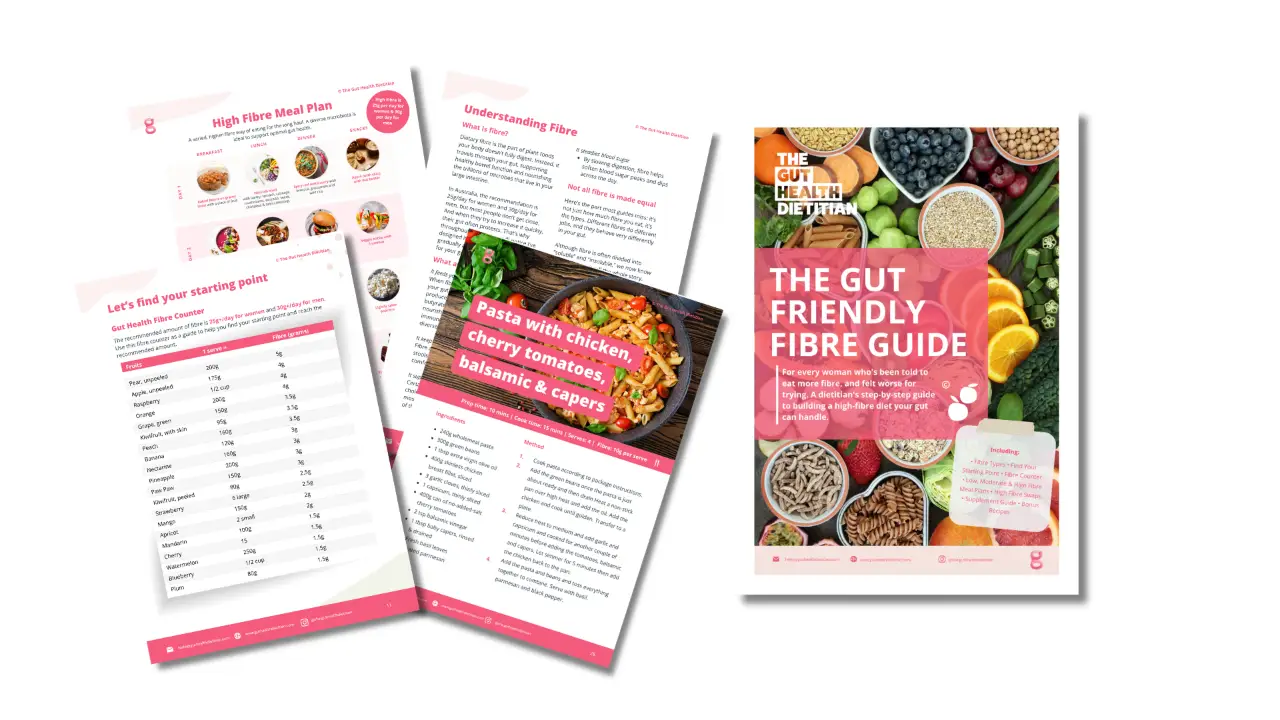
THE GUT FRIENDLY FIBRE GUIDE
An evidence-based guide for women to eat more fibre without making their gut feel worse
If eating more fibre has ever left you feeling worse, fibre probably wasn’t the problem. More likely, your gut just needed you to go slower.
This guide is based on the approach I use with women who want to eat more fibre without making their gut feel worse. We start with where you are now, then build from there slowly enough that your gut can keep up.
It’s food-first, weight-neutral and evidence-based, created by me and my team of Accredited Practising Dietitians.