How to Choose Your Fibre
“Eat more fibre” is simple advice, but the gut response is anything but. Some fibres can improve constipation and cholesterol, others may increase bloating, and some do both depending on the person.
Traditionally, fibre has been described as “soluble” or “insoluble.” While this is still commonly used, it doesn’t fully explain how fibre behaves in the body. There is considerable overlap between the two, and many fibres don’t fit neatly into either category. Psyllium, for example, is classified as a soluble fibre but behaves very differently from other soluble fibres such as inulin.
Because of this, a more useful approach is to focus on how fibre functions in the gut rather than how it is labelled.
Fermentability: how fibre interacts with gut bacteria
One of the most important ways fibre behaves in the gut is through fermentation. This is the process where gut bacteria break down certain fibres in the large intestine, producing beneficial compounds that support gut health, including short-chain fatty acids.
However, fermentation also produces gas, which is why this is particularly relevant for people with bloating or IBS symptoms.
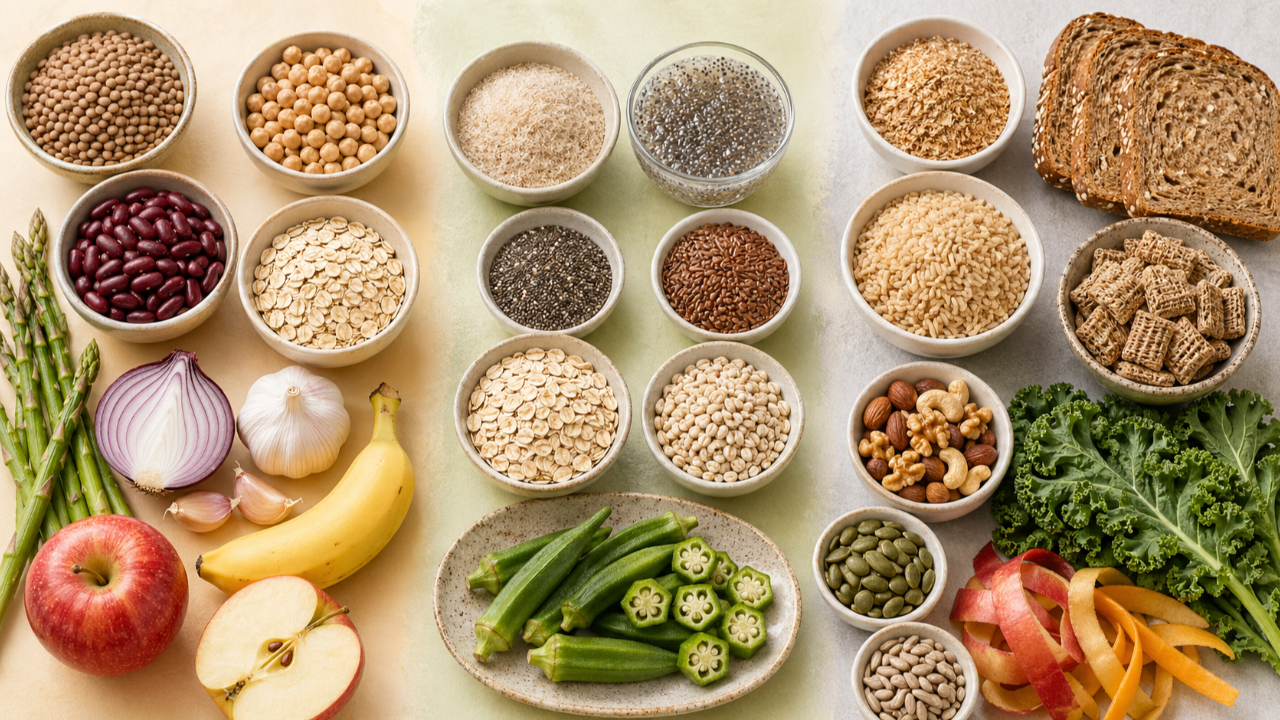
Some fibres are highly fermentable, including inulin (found in onions and garlic), legumes, and certain prebiotic fibres. These tend to have strong benefits for microbiome diversity but can also increase gas and bloating, especially if intake is increased quickly.
Other fibres, such as psyllium husk, are minimally fermented. This means they tend to produce less gas and are often better tolerated in sensitive digestive systems, while still supporting bowel function.
Viscosity: fibres that form a gel
Another key property is viscosity, which refers to whether a fibre forms a gel when it comes into contact with water in the gut.
Viscous fibres slow digestion and influence how nutrients are absorbed. They can also bind to bile acids, which is one of the mechanisms by which they help lower LDL cholesterol.
Foods rich in viscous fibres include oats, barley, chia seeds, and psyllium. Psyllium is particularly useful because it is both highly viscous and minimally fermented. This combination helps explain why it can support a wide range of gut symptoms.
In constipation, it helps by holding water in the stool, making it easier to pass. In diarrhoea, it can help absorb excess fluid and improve stool consistency. This is why psyllium is often described as a “normalising” fibre.
Stool form and bowel function
Fibre also affects the physical movement and structure of stool.
Some fibres, particularly coarse insoluble fibres like wheat bran, increase stool bulk and stimulate movement through the colon. This can be helpful in some cases of constipation but is not always well tolerated, particularly in people with IBS or bloating.
Other fibres, especially gel-forming fibres like psyllium, work more by adjusting stool consistency rather than simply increasing bulk. This tends to result in more predictable and gentler changes in bowel habits.
Matching fibre to your goal
Once you understand these differences, it becomes easier to match fibre type to specific health goals rather than treating all fibre the same.
For cholesterol reduction, viscous fibres such as oats, barley, and psyllium are most effective due to their ability to bind bile acids and influence cholesterol metabolism.
For constipation, a combination of fibre types can be helpful, but tolerance and fluid intake are key. Psyllium is often well tolerated and effective, while wheat bran may help some individuals but worsen symptoms in others.
For IBS or bloating, fermentability becomes especially important. Lower fermentable fibres such as psyllium are often better tolerated, particularly when introduced gradually. Highly fermentable fibres may still be included but require more careful titration.
For general gut health, a mix of fibre types is still ideal, as different fibres feed different gut bacteria and support a diverse microbiome.
A Final Word
Fibre is not a single nutrient with a single effect. It behaves differently depending on how it is fermented, how it interacts with water, and how it influences stool movement.
Understanding these differences allows fibre intake to be tailored more effectively to symptoms and health goals, rather than relying on a one-size-fits-all recommendation.
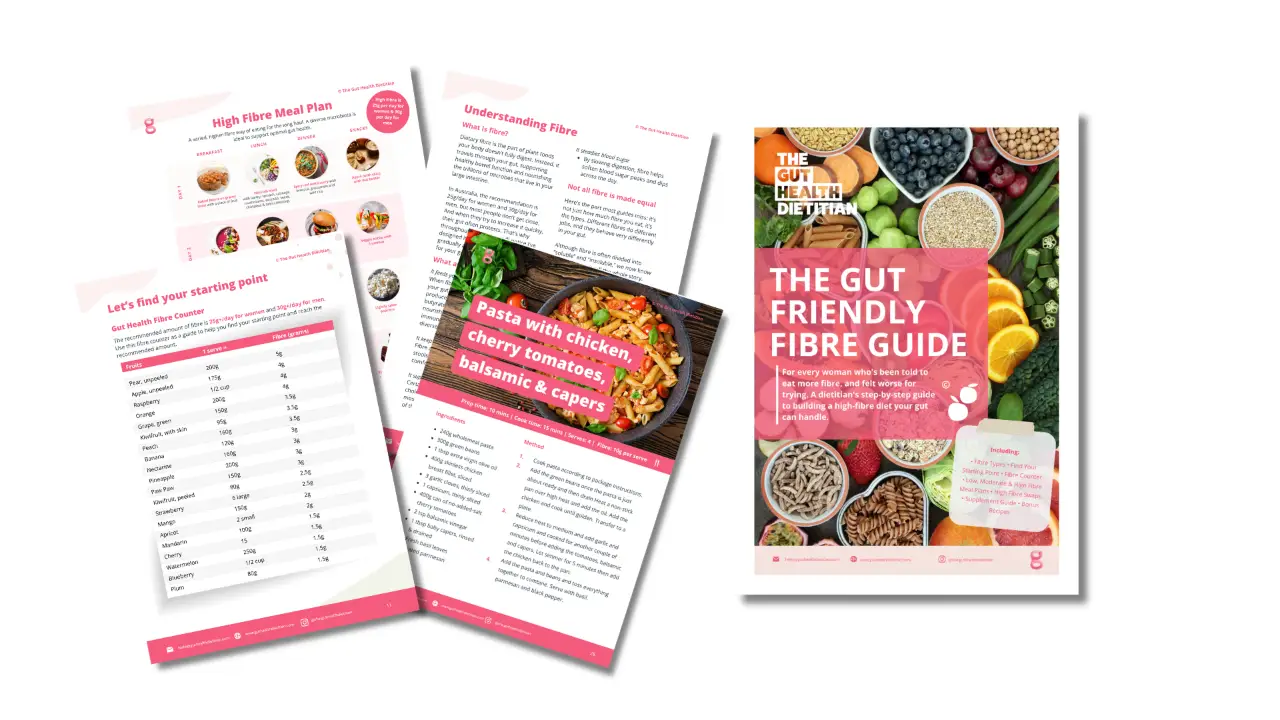
THE GUT FRIENDLY FIBRE GUIDE
An evidence-based guide for women to eat more fibre without making their gut feel worse
If eating more fibre has ever left you feeling worse, fibre probably wasn’t the problem. More likely, your gut just needed you to go slower.
This guide is based on the approach I use with women who want to eat more fibre without making their gut feel worse. We start with where you are now, then build from there slowly enough that your gut can keep up.
It’s food-first, weight-neutral and evidence-based, created by me and my team of Accredited Practising Dietitians.