Constipation Relief: What to Eat When You Can’t Go

What to do when you can’t go to the loo...?
Constipation is one of the most common, and often under-discussed, gut complaints. It can leave you feeling bloated, heavy, uncomfortable and frustrated, especially when you feel like you are doing “all the right things” and still not getting relief.
For some people, constipation is linked to low fibre intake, not drinking enough fluid, changes in routine, stress, travel, medications or not moving as much as usual. In perimenopause and menopause, hormonal changes may also slow gut motility, which can make constipation more noticeable.
For many people, starting with the foundations like fibre, fluids and movement is helpful. While these strategies still matter, they don’t always go far enough. Emerging evidence, including systematic reviews of more than 75 randomised controlled trials, points to a more targeted approach to constipation management.
Rather than relying on general advice alone, we now have specific supplements, foods and fluid strategies shown to deliver measurable clinical benefit. Let’s get into what works.
Fibre supplements: psyllium has the strongest evidence
Among fibre supplements, psyllium consistently shows the most reliable benefit for constipation.It is a soluble, gel-forming fibre that can help:
- increase stool water content
- improve stool consistency
- increase stool frequency in many people
In updated guidelines, fibre supplements, including psyllium, are supported by multiple recommendation statements, reflecting consistent findings across clinical trials.
Practical use
Start with 1 teaspoon daily and increase gradually if needed.Always take psyllium with adequate fluid. Without enough fluid, psyllium is less effective and may worsen bloating or discomfort.
Kiwifruit: one of the few foods with direct clinical evidence
Kiwifruit is one of the few individual foods included in constipation guidelines with trial data supporting its use. Studies show that regular kiwifruit intake may improve stool frequency and ease of passage. It is now included in formal dietary recommendations for constipation management. The proposed benefits are thought to relate to its fibre content, actinidain enzyme and effects on gastrointestinal motility.
Dose used in studies
The studied amount is generally: 2-3 kiwifruit per day
This is a consistent, studied amount rather than an occasional kiwifruit here and there.
Magnesium oxide: an osmotic option with evidence
Magnesium oxide is included in updated guidelines as a supplement option for constipation. It acts as an osmotic agent, which means it helps draw water into the intestine. This can soften the stool and make it easier to pass.
The guidelines include several recommendation statements for magnesium oxide, reflecting its role as a therapeutic option in certain cases.
Clinical considerations
Magnesium oxide may be helpful for harder or infrequent stools, but it is not suitable for everyone. Its effects are dose-dependent, meaning higher doses may cause diarrhoea. It also needs extra caution in people with kidney disease and is not something to take long-term without appropriate guidance. It is best considered a targeted option, rather than a first-line daily supplement for everyone.
Foods with evidence for constipation
The updated guidelines identify several specific foods that have been studied in clinical trials.
Kiwifruit
As above, kiwifruit has consistent evidence for improving stool frequency and ease of passage.
Prunes
Prunes contain sorbitol and fermentable fibre, which can help improve stool consistency and frequency.
Rye bread
Rye bread is higher in fermentable fibre and has been associated with improved bowel function in some studies. These foods will not work the same way for everyone, but they do have more evidence behind them than general “just eat more fibre” advice.
Fluids: mineral content may be relevant
Hydration remains important in constipation management, but the guidelines also include high mineral-containing water as a potential supportive strategy. This is thought to relate to magnesium and sulphate content, which may influence intestinal water movement. While it is not a primary treatment, it may be a useful addition for some people.
A final word
For constipation, a reasonable evidence-based starting approach may include:
- psyllium fibre supplement, gradually introduced with fluid
- 2-3 kiwifruit daily
- adequate fluid intake
- prunes or rye bread as dietary additions if needed
- magnesium oxide in selected cases where clinically appropriate
Constipation support is not just about increasing fibre in general. It is about using specific types of fibre, foods and strategies that have demonstrated effects in clinical trials. And if constipation is new, severe, ongoing, associated with pain, bleeding, unexplained weight loss, or a major change in bowel habits, it is important to check in with your GP.
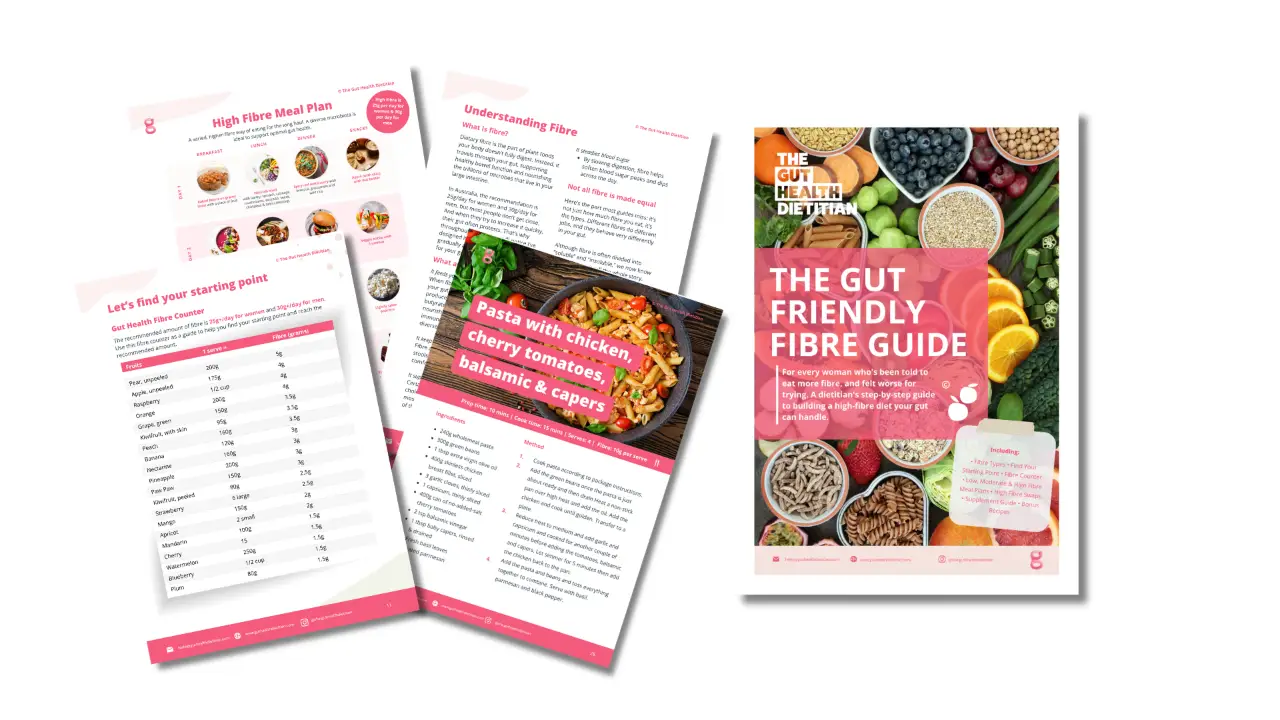
THE GUT FRIENDLY FIBRE GUIDE
An evidence-based guide for women to eat more fibre without making their gut feel worse
If eating more fibre has ever left you feeling worse, fibre probably wasn’t the problem. More likely, your gut just needed you to go slower.
This guide is based on the approach I use with women who want to eat more fibre without making their gut feel worse. We start with where you are now, then build from there slowly enough that your gut can keep up.
It’s food-first, weight-neutral and evidence-based, created by me and my team of Accredited Practising Dietitians.