The Diversity Your Gut Needs in Perimenopause

During perimenopause & menopause, your body goes through hormonal changes that begin to reshape your gut microbiota. You may see a decline in certain beneficial species, while some less helpful or more inflammatory microbes increase. These changes can influence hormone recycling, metabolism, and even brain health.
Arguably, this makes supporting your gut even more important during perimenopause and menopause.
how does gut diversity change?
In perimenopause and menopause, studies suggest:
- Lactobacillus and Bifidobacterium are commonly reduced, which can affect gut barrier integrity and metabolite production
- Firmicutes, including Roseburia, are often lower post-menopause. These bacteria produce butyrate, a short-chain fatty acid important for metabolic and gut health
- Bacteroidetes and some pathobionts (e.g. Enterobacter) may increase, potentially contributing to low-grade inflammation and metabolic shifts
That said, not all studies show consistent changes. Diet, physical activity, body composition, medications, and genetics all play a role.
What matters most is not just fibre intake, but functional microbial diversity, supporting microbes that produce key metabolites involved in hormone processing, metabolic balance, and gut-brain signalling.
the estrobolome: your gut’s hormone partner
Your gut hosts the estrobolome, a group of bacteria that produce enzymes like β-glucuronidase. These enzymes can reactivate oestrogen in the intestine so it can be reabsorbed into circulation.
- Reduced estrobolome activity is associated with lower circulating oestrogen, which may impact metabolic, bone, and cardiovascular health
- There are emerging links to symptoms like hot flushes, mood changes, and bloating, although this is still early research
Many women respond to weight changes in perimenopause by cutting carbohydrates.
But this can backfire.
Adequate carbohydrates provide key substrates for gut microbes, including those involved in oestrogen recycling. Reducing them too much can negatively impact microbial diversity and, in turn, gut health.
butyrate producers: metabolic and gut regulators
Certain gut microbes produce butyrate, a short-chain fatty acid with multiple roles:
- Strengthens the intestinal barrier and helps regulate inflammation
- Improves insulin sensitivity and supports fat metabolism
- Communicates with the brain via the gut-brain axis, influencing appetite and cognition
Declines in butyrate-producing bacteria during perimenopause may contribute to metabolic changes, including increased abdominal fat and subtle insulin resistance.
The good news is that these microbes are highly responsive to diet.
Foods that support butyrate production include:
- Legumes and beans
Chickpeas, black beans, kidney beans, white beans. If you’re not used to them, start small. Try roasting chickpeas for a snack or adding a handful to meals like tacos or salads. - Whole grains and cooled starches
Oats, brown rice, quinoa. Cooking and cooling foods like rice, pasta, and potatoes increases resistant starch. Think potato salad or leftover pasta salads with veggies. - Fermented vegetables
These help support microbial diversity and overall gut resilience
Even modest increases in these foods can support metabolic balance and gut integrity.
polyphenols: brain and metabolic support
Polyphenols are plant compounds that gut microbes convert into bioactive compounds with anti-inflammatory and potential neuroprotective effects.
They act like prebiotics, shaping the gut microbiome.
Different microbes metabolise different polyphenols, which is why variety matters.
Sources include:
berries, cocoa, green tea, herbs, spices
Rather than having the same source daily, rotating these foods helps support a broader range of microbes and beneficial metabolites.
a functional diversity framework
Eating more plants is a great start, but the type and variety of foods matter.
A simple framework:
- Prebiotic fibres & resistant starches support butyrate and SCFA production
- Polyphenol rotation supports brain and metabolic pathways
- Fermented foods help maintain microbial diversity and resilience
Small, consistent changes can help stabilise metabolism, support oestrogen processing, and maintain gut-brain communication.
what can you do?
If you want something practical to start with, here’s a simple checklist:
- Add legumes 2-3 times per week
Choose a couple of meals where you can easily add beans or lentils - Choose a polyphenol source each week
Add berries, cocoa, or green tea to your routine - Cook and cool a starchy food
Rice, potatoes, or pasta (store in the fridge and use across the week) - Add a fermented food
Sauerkraut or kimchi to your shopping list - Aim for 3 colours on your plate at dinner
A mix of vegetables and leafy greens
Focusing on function rather than just fibre intake gives your gut what it needs to support hormonal, metabolic, and cognitive health.
a final word
Perimenopause brings subtle but meaningful changes to your gut microbiota.
By supporting functional microbial diversity through your diet, you can help maintain metabolic balance, optimise oestrogen processing, and support gut-brain health during this transition.
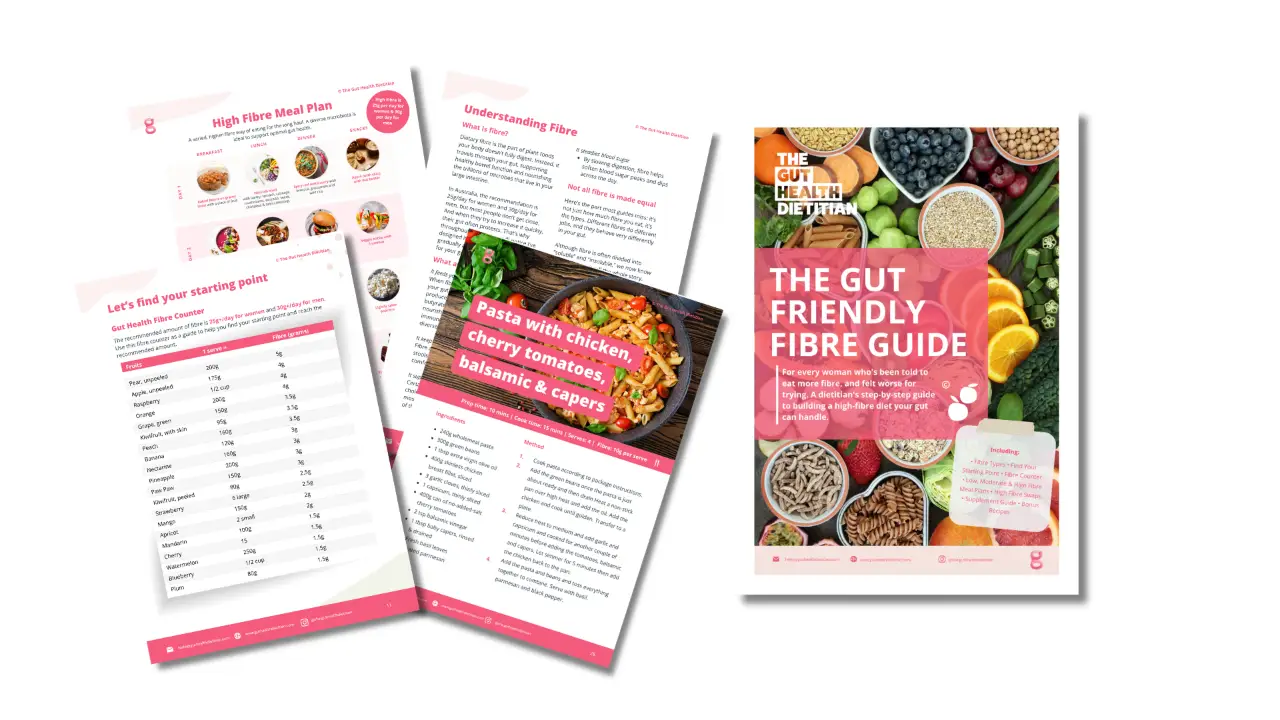
THE GUT FRIENDLY FIBRE GUIDE
An evidence-based guide for women to eat more fibre without making their gut feel worse
If eating more fibre has ever left you feeling worse, fibre probably wasn’t the problem. More likely, your gut just needed you to go slower.
This guide is based on the approach I use with women who want to eat more fibre without making their gut feel worse. We start with where you are now, then build from there slowly enough that your gut can keep up.
It’s food-first, weight-neutral and evidence-based, created by me and my team of Accredited Practising Dietitians.