Why counting calories can feel like nothing is working

If you think about tracking your nutrition, your mind might first turn to calorie counting: How many did I eat? How many did I burn? Am I in a deficit?
During perimenopause, we'd argue that if navigating bloating, unpredictable digestion, and hormonal shifts, counting calories is rarely going to be the most helpful place to focus.
Tracking can absolutely bring awareness, and in some cases calorie counting may be helpful, such as identifying where a very high amount of kilojoules could be coming in (such as during mindless snacking or hidden kilojoules in some drinks, for instance).
However, in most cases, tracking calories isn't the most helpful approach for the majority of women, but tracking other areas of your nutrition may be if it's something that you'd like to do! This week, we are shifting the focus from calories to nourishment, gut patterns, and the nutrients that truly support midlife health.
When Calorie Tracking May Not Be Helpful
Calorie tracking can feel productive, but it often pulls attention away from quality and toward restriction. For many women, especially those with a history of dieting, it increases stress and disconnects from hunger and fullness cues.
In perimenopause, the goal is stability. Stable blood sugar. Stable energy. Stable digestion. Stable mood. Fixating on numbers does not necessarily create that.
It's also important to note that for women with a history of eating disorders or disordered eating, any form of tracking can be triggering. If that applies to you, please speak with your GP or dietitian before beginning any type of food tracking. It may not be appropriate, and that is completely valid.
Tracking is optional. It is a tool for awareness, not a requirement for health.
What Might Be Worth Tracking Instead?
If your goal is improved gut health and hormonal support, these areas are far more valuable to observe:
Protein intake
Adequate protein becomes increasingly important in perimenopause to support muscle mass, metabolism, and satiety. Many women underestimate how much they are consuming.
General target:
Aim for 20-30g of protein per main meal, or approximately 1.2–1.6g per kg of body weight per day (individual needs vary).
Many women unintentionally under-eat protein at breakfast in particular. A simple check:
Does your breakfast contain at least one solid protein source (eggs, Greek yoghurt, protein-rich smoothie, tofu, cottage cheese)?
Calcium intake
Bone density becomes a priority as oestrogen fluctuates. Tracking calcium rich foods across a week can highlight gaps.
General target:
Women over 50 require around 1,300mg calcium per day.
This might look like:
-
1 cup milk = ~300mg
-
200g yoghurt = ~300mg
-
2 slices cheese = ~300mg
-
Calcium-set tofu or fortified alternatives
Tracking calcium-rich foods across a week can quickly highlight gaps.
Omega 3 intake
These fats support inflammation balance, mood, and cardiovascular health. Are you eating oily fish two to three times per week?
General target:
-
Oily fish (such as salmon, sardines, mackerel) 2-3 times per week
Many women eat fish occasionally, but not consistently enough for therapeutic benefit.If fish isn't a regular part of your diet, you may benefit from a fish oil or algae oil supplement.
Alcohol intake
Alcohol is one of the most underestimated contributors to poor sleep and gut irritation. When women track it honestly for a week, they are often surprised. Not for judgment, but for awareness.
Guideline:
In Australia, no more than 10 standard drinks per week, and no more than 4 on any one day is recommended. However, depending on your goals, what to aim for can vary. Tracking honestly for one week often provides clarity, not for judgment, but for awareness.
Fibre diversity
Gut bacteria thrive on variety AND getting adequate fibre.
Fibre target:
Aim for 25g per day minimum.
But beyond grams, aim for:
20-30 different plant foods per week (vegetables, fruit, legumes, wholegrains, nuts, seeds, herbs, spices).
Using a Simple Food Diary
Maybe you prefer pen and paper, or maybe Easy Diet Diary suits you best. Just remember that the purpose is not to calculate every gram in a day. It is to step back and look at patterns across one to two weeks.
Ask yourself:
-
Am I consistently skipping protein at breakfast?
-
Are my calcium sources minimal?
-
Do I drink most nights without realising?
-
Is my fibre intake inconsistent?
It's this awareness that can help you guide your choices going forward.
A Closer Look at Gut Health
If you experience bloating, irregular bowel movements, reflux, or abdominal discomfort, pairing a food diary with a simple symptom tracker can be incredibly useful.
At the end of each day, record:
-
Bloating level, none, mild, moderate, severe
-
Stool consistency
-
Urgency
-
Abdominal pain
-
Energy levels
-
Mood
You can even rate your four health buckets as empty, half full, or full:
Sleep
Nutrition
Movement
Stress
Over one week, patterns often emerge. Perhaps bloating worsens after rushed meals. Perhaps poor sleep precedes constipation. Perhaps high stress days correlate with loose stools.
This is far more insightful than a calorie total.
Correlation, Not Perfection
The goal of tracking in perimenopause is not to create a perfect diet. It is to identify patterns that impact gut comfort, energy, and mood.
Sometimes women discover they are under eating protein. Sometimes they realise alcohol is affecting sleep more than expected. Sometimes they see that their symptoms spike during high stress weeks regardless of what they eat.
Nutrition does not exist in isolation. It interacts constantly with sleep and stress.
When we track intelligently, we begin to see the whole picture.
A Final Word
If you choose to track, tracking should feel neutral or helpful. If it feels obsessive, anxiety provoking, or restrictive, take a moment to decide whether it's right for you. Your body does not need micromanaging. There's many other ways to keep on top of your nutrition without worrying about numbers. For example, for most women, aiming for half a plate of veggies, a quarter plate lean protein, and a quarter plate of quality carbs can be helpful guide to meet your nutrition needs without worrying about numbers.
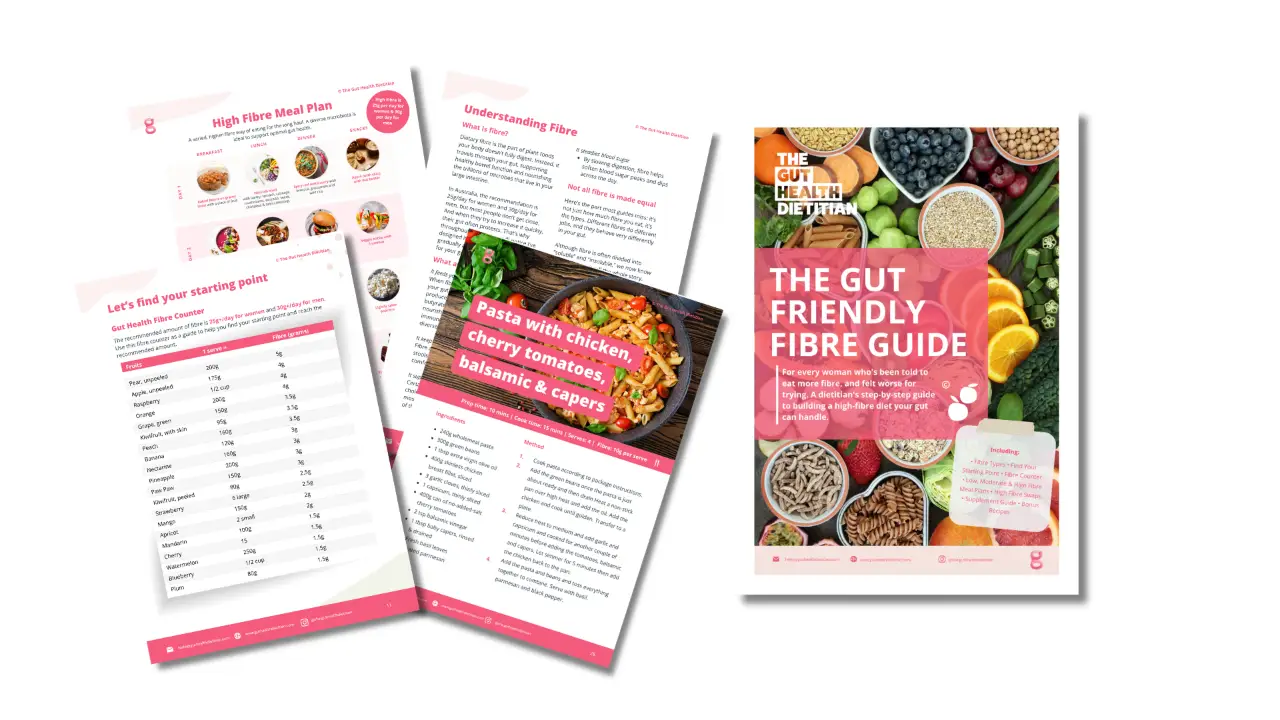
THE GUT FRIENDLY FIBRE GUIDE
An evidence-based guide for women to eat more fibre without making their gut feel worse
If eating more fibre has ever left you feeling worse, fibre probably wasn’t the problem. More likely, your gut just needed you to go slower.
This guide is based on the approach I use with women who want to eat more fibre without making their gut feel worse. We start with where you are now, then build from there slowly enough that your gut can keep up.
It’s food-first, weight-neutral and evidence-based, created by me and my team of Accredited Practising Dietitians.