Diverticular Disease: What the Updated Nutrition Advice Really Says
As a gut health dietitian, one of the most common questions I’m asked is: “What should I eat if I have diverticular disease?” For years, people with diverticulosis or diverticulitis were told to avoid nuts, seeds, corn, popcorn, essentially anything small enough to “get stuck” in a diverticulum. We now know this advice wasn’t just outdated… it was never supported by evidence.
A more recent nuance (and one that causes just as much confusion) is what to do during a flare. Many people are still told to switch to a strict low‑fibre or low‑residue diet the moment symptoms worsen. But just like the nut‑and‑seed myth, this blanket restriction doesn’t match what the evidence shows.
Today’s research gives us a much clearer, more empowering picture. And it’s good news: nutrition does matter, but the rules are far more flexible than many people have been told.
Below is a breakdown of what the current evidence shows and how to apply it safely and realistically.
What Is Diverticular Disease: And Why Do Some People Get Symptoms?
Diverticular disease occurs when small pouches (called diverticula) form in the wall of the large intestine, most commonly in the lower part of the colon. These pouches develop over time as areas of the bowel wall become weaker and push outward.
The tricky part? We still don’t fully understand exactly why some people develop diverticula and others don’t.
For many years, diverticular disease was thought to be mainly caused by low fibre intake and constipation. We now know it is much more complex. Research suggests that a combination of factors may play a role, including:
- genetics and family history
- ageing and changes in the structure of the bowel wall
- gut motility and pressure within the colon
- inflammation and immune factors
- the gut microbiome
- overall dietary patterns and lifestyle factors
Importantly, having diverticula does not automatically mean you will have symptoms. Many people have diverticulosis (diverticula in the bowel) and never know they have it, it is often found incidentally during investigations such as a colonoscopy or CT scan.
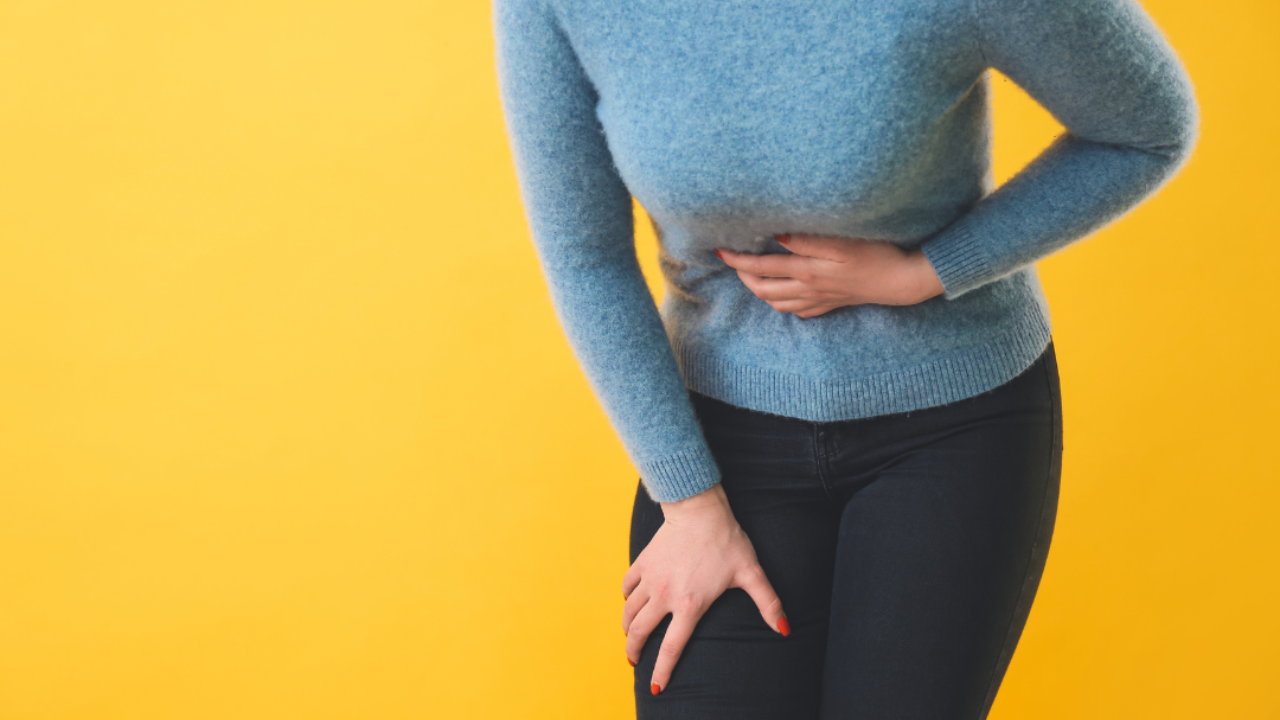
Symptoms usually occur when diverticula become irritated, inflamed, or complicated. When a diverticulum becomes inflamed, this is known as diverticulitis. This can cause symptoms such as:
- lower abdominal pain (often on the left side, depending on where the diverticula are located)
- tenderness
- changes in bowel habits (such as constipation or diarrhoea)
- bloating
- fever or feeling generally unwell in some cases
A key point: Nutrition strategies are focused on reducing risk, supporting bowel health, and managing symptoms when they occur, not “protecting” the diverticula from food.

Image Reference: AJMed, Diverticular Disease (accessed July 2026).
The Big Picture: Diet Quality Matters More Than Individual Foods
The strongest and most consistent finding across studies is simple: higher fibre intake is associated with lower risk of diverticular disease. In fact, research has found that:
- For every extra 5 grams of fibre eaten per day, studies have found an association with around a 14% lower risk of diverticular disease.
- People with the highest fibre intakes have around a 40% lower risk of diverticular disease compared with those eating the least fibre.
These findings come from several large population studies and have been consistently observed over time (Hawkins 2020; Carabotti 2021; Veronese 2025). Research also suggests that fruit and wholegrain cereal fibres may be particularly protective.
Healthy dietary patterns (like the Mediterranean diet) also show lower incident diverticulitis risk (Barlowe 2025; Guo 2025).
This doesn’t mean fibre prevents every flare or every symptom. But it does mean that long‑term diet quality matters, and fibre plays a central role.
Studies in both men and women show no increased risk of diverticulitis from nuts, seeds, corn, or popcorn. In fact, some analyses suggest nuts may even be protective due to their fibre, healthy fats, and polyphenols.
While fibre is protective, red meat (especially unprocessed red meat) tends to increase diverticulitis risk. Western dietary patterns high in red meat, refined grains, and low in plants show similar associations.
Emerging Areas: Polyphenols, Dried Fruit & the Microbiome
Newer research is exploring:
-
polyphenol‑rich foods
-
dried fruit (Mendelian randomization suggests possible protection)
-
microbiome‑targeted patterns like Mediterranean or plant‑based diets
These areas are promising but not yet definitive. Still, they align with broader gut‑health principles: more plants, more diversity, more whole foods.
This is where things get tricky, and where outdated advice still circulates.
Our Short answer:
A temporary low‑fibre or low‑residue diet can be appropriate during an acute flare for symptom control, but routine fibre restriction is not supported.
Our Longer answer:
Research shows that:
-
Evidence comparing restricted vs. liberalized fibre intake during flares is very low quality
-
Liberalised diets were conditionally recommended over strict restriction (that means, eat normally during a flare)
-
High‑fibre diets were recommended after the acute episode resolves
In practice, low‑fibre diets may be used short‑term when:
-
symptoms are severe
-
obstruction risk is a concern
-
someone simply cannot tolerate bulk
But this is individualised, not a blanket rule.
This is the strongest protective signal we have.
2. Nuts and seeds are safe, and often beneficial.
No need to avoid them unless you notice symptoms.
3. Red meat and Western‑style eating patterns increase risk.
Swap in poultry, legumes, fish, and plant proteins more often.
4. Eat normally during a flare. There is only poor evidence for a low fibre diet.
Eat normally or use it for comfort, not as a long‑term strategy.
5. After the flare resolves, return to fibre gradually.
This supports microbiome recovery and long‑term gut health.
6. Individualisation matters.
Symptoms, and tolerance vary widely. Work with a gut‑specialist dietitian to tailor your plan.
In practice, this may look like gradually building towards a diet rich in vegetables, fruit, legumes, wholegrains, nuts, seeds and other plant foods, while choosing foods that suit your own tolerance and preferences
Nutrition for diverticular disease has evolved, thankfully. We’ve moved past fear‑based restriction and toward evidence‑based, flexible, whole‑food eating that supports both gut health and overall wellbeing.
References:
Askani, E. (2021). MRI‑based assessment of fibre intake and asymptomatic diverticular disease.
Barlowe, L. (2025). Dietary patterns, nuts/seeds, and diverticulitis risk in prospective cohorts.
Carabotti, M. (2021). Dietary fibre intake and diverticular disease risk.
Dahl, C. (2018). Liberalized vs. restricted diets in acute uncomplicated diverticulitis: A systematic review.
Guo, Y. (2025). Healthy dietary patterns and incident diverticulitis risk.
Hawkins, A. (2020). Prospective cohort evidence linking fibre intake with diverticular disease risk.
Polese, A. (2023). Red meat intake and diverticulitis risk.
Tursi, A. (2020). Dietary factors and diverticular disease: Updated evidence.
Veronese, N. (2025). Current nutrition evidence for diverticular disease.
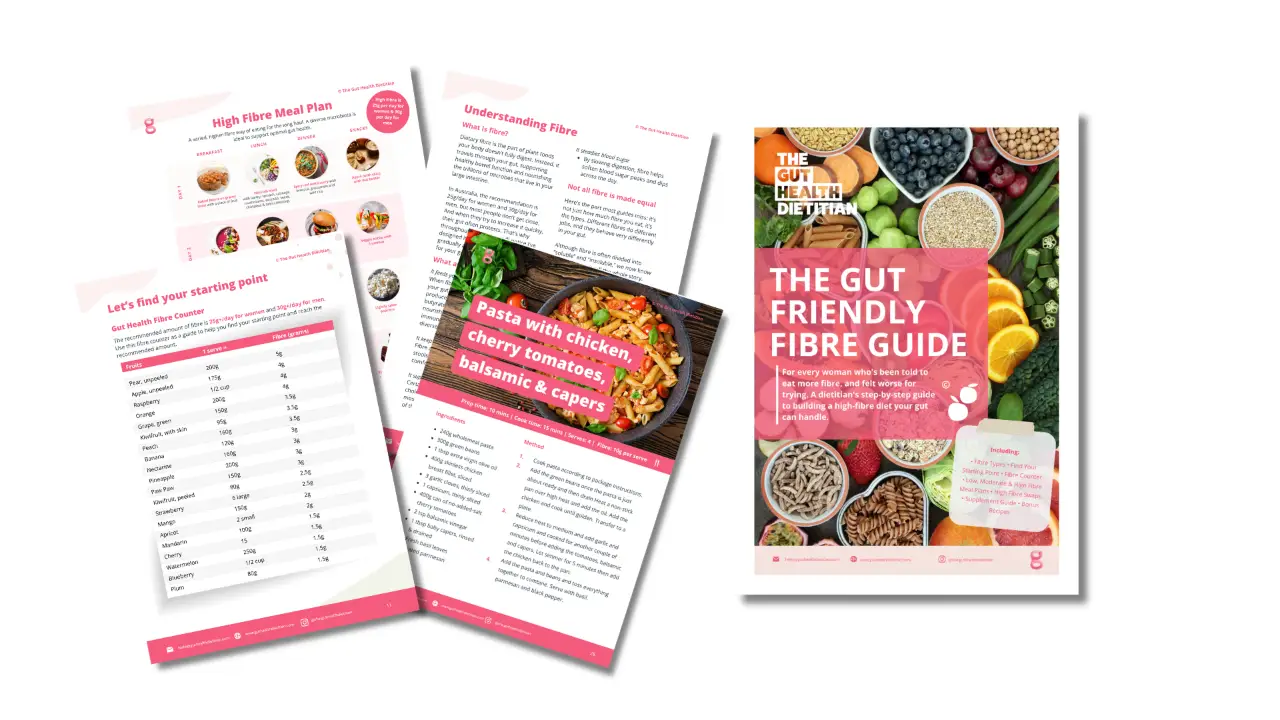
THE GUT FRIENDLY FIBRE GUIDE
An evidence-based guide for women to eat more fibre without making their gut feel worse
If eating more fibre has ever left you feeling worse, fibre probably wasn’t the problem. More likely, your gut just needed you to go slower.
This guide is based on the approach I use with women who want to eat more fibre without making their gut feel worse. We start with where you are now, then build from there slowly enough that your gut can keep up.
It’s food-first, weight-neutral and evidence-based, created by me and my team of Accredited Practising Dietitians.