Is It Just Bloating... or Something More? 8 Bowel Cancer Red Flags You Shouldn't Ignore

Bloating after a big meal, constipation while travelling, or the occasional bout of diarrhoea can be completely normal. Most of us will experience digestive symptoms from time to time, and often there's a simple explanation.
As gut health dietitians, we often help clients manage symptoms such as bloating, constipation and diarrhoea. While these are frequently linked to diet, lifestyle factors or common digestive conditions, it's important to recognise when further medical assessment may be needed.
This Bowel Cancer Awareness Month, we're highlighting the signs and symptoms that deserve further investigation. Bowel cancer is one of the most common cancers in Australia, and early detection can significantly improve outcomes. Don't assume symptoms are "normal" without understanding what's causing them, especially if they're new, persistent, or getting worse. Here are several signs and symptoms to be aware of:
#1: Blood in Your Stool: Never Assume It's Haemorrhoids
One of the most common mistakes people make is assuming that blood in the toilet bowl, on the toilet paper, or mixed through the stool is simply due to haemorrhoids.
While haemorrhoids are common and often harmless, they should never be used as a self-diagnosis.
Any unexplained rectal bleeding should be assessed by a healthcare professional, particularly if:
- It occurs repeatedly
- You are over 40
- It is accompanied by changes in bowel habits
- You have unexplained weight loss or fatigue
- There is a family history of bowel cancer
Blood deserves an explanation. Even if the cause turns out to be harmless, it's always worth having it checked!
#2: Bloating That Doesn't Go Away
Firstly, many people experience occasional bloating. It can be triggered by certain foods, stress, constipation, menstrual cycles, or digestive conditions such as IBS.
However, persistent bloating that doesn't improve, continues to worsen, or feels different from your usual symptoms is worth noting. Particularly concerning signs include bloating that is:
- Present most days
- Progressively worsening
- Accompanied by abdominal pain
- Associated with changes in appetite
- Linked to unintentional weight loss
Your body knows what's normal for you. If something feels different and doesn't settle, it's worth investigating!
#3: Changes in Bowel Habits: Not Always "Just Hormones"
Many women are surprised to learn that digestive symptoms can become more noticeable during perimenopause. Fluctuating oestrogen and progesterone levels can influence gut motility, contributing to symptoms such as:
- Constipation
- Looser stools
- Increased bloating
- More noticeable IBS symptoms
The challenge is that bowel cancer can also cause changes in bowel habits, so there can be an overlap in many of these symptoms. Symptoms that should be discussed with your GP include:
- Persistent diarrhoea
- New constipation that doesn't improve
- Alternating constipation and diarrhoea
- Narrower or pencil-thin stools
- Feeling unable to completely empty your bowels
- A noticeable change in your usual bowel pattern lasting more than a few weeks
While hormonal changes may be responsible, it's important not to automatically attribute every digestive symptom to perimenopause.
#4: Unexplained Fatigue and Iron Deficiency
Feeling unusually tired isn't always a sign of a busy lifestyle. Iron deficiency and fatigue can sometimes be among the earliest signs of bowel cancer, particularly when slow bleeding from the bowel occurs without obvious visible blood. If you're experiencing ongoing fatigue despite adequate sleep, or blood tests show low iron levels without an obvious explanation, further investigation may be needed.
#5: Unintentional Weight Loss
Weight loss that occurs without trying should always be taken seriously, as unexplained weight loss can be a sign that the body is dealing with an underlying illness. If you've lost weight without making significant changes to your diet or exercise routine, speak with your GP.
#6: Abdominal Pain That Persists
Occasional digestive discomfort is common. Ongoing abdominal pain is not.
Symptoms that warrant medical review include:
- Pain that wakes you from sleep
- Pain that progressively worsens
- Pain associated with bowel habit changes
- Pain accompanied by bleeding, weight loss, or fatigue
Persistent abdominal pain should never be ignored.
#7: Know Your Family History
Family history plays an important role in bowel cancer risk.
Your risk may be increased if you have a family history of:
- Bowel cancer
- Advanced bowel polyps
- Certain inherited cancer syndromes
Understanding your family history can help determine whether earlier screening is appropriate.
#8: Lastly, Don't Ignore Symptoms Because You're "Too Young"
While bowel cancer is more common in older adults, rates in younger adults have been increasing globally. Many younger people delay seeking help because they assume they're too young for bowel cancer, or because symptoms are attributed to stress, IBS, diet, or hormonal changes. Age alone should never be used to dismiss persistent symptoms.
A Final Word
Most digestive symptoms will not turn out to be bowel cancer, however, persistent symptoms should never be ignored.
Additionally, bowel cancer doesn't always cause symptoms in its early stages, which is why screening is so important.
In Australia, eligible adults (45-74 years) can participate in the National Bowel Cancer Screening Program using a simple at-home screening test. Screening can detect changes before symptoms develop and significantly improve treatment outcomes.
It's important to know what's normal for your body and what isn't. If something feels different, persists for weeks, or continues to worsen, don't wait. Early investigation can provide peace of mind and, in some cases, save lives.
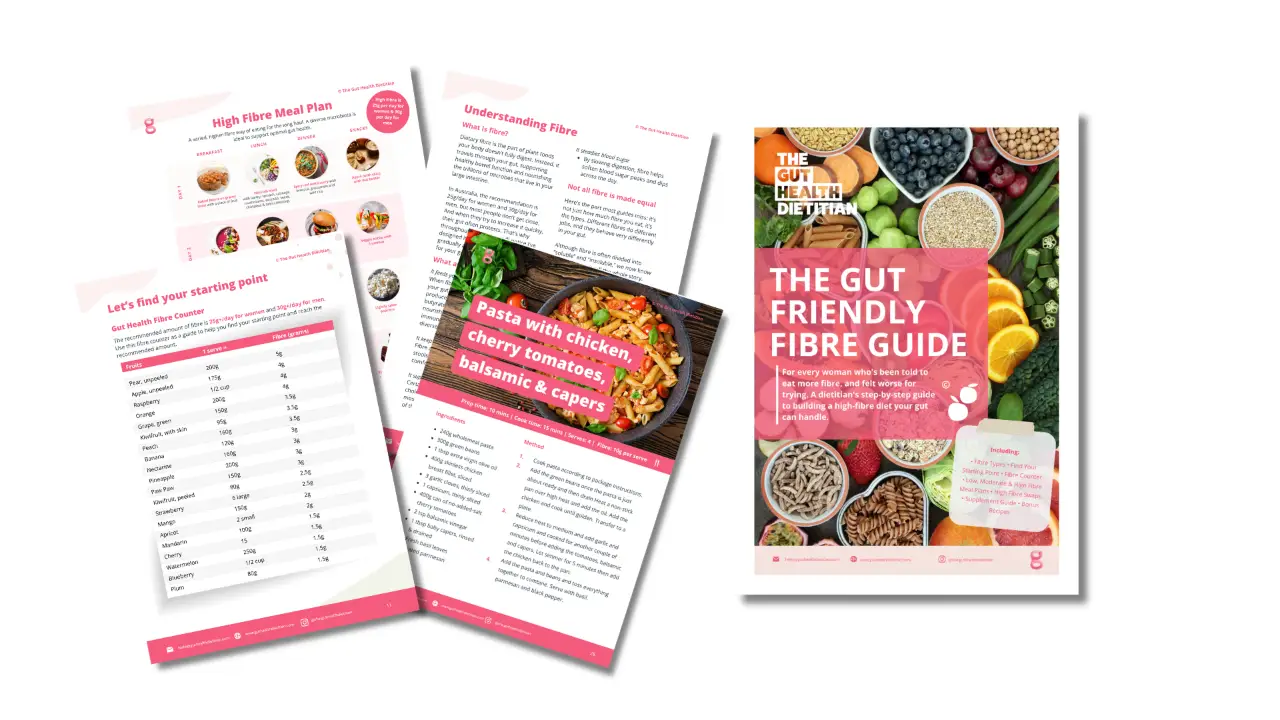
THE GUT FRIENDLY FIBRE GUIDE
An evidence-based guide for women to eat more fibre without making their gut feel worse
If eating more fibre has ever left you feeling worse, fibre probably wasn’t the problem. More likely, your gut just needed you to go slower.
This guide is based on the approach I use with women who want to eat more fibre without making their gut feel worse. We start with where you are now, then build from there slowly enough that your gut can keep up.
It’s food-first, weight-neutral and evidence-based, created by me and my team of Accredited Practising Dietitians.