Could Your Bloating Actually Be Constipation?

If you feel bloated, heavy, or uncomfortable after eating, constipation may not be the first thing that comes to mind.
In fact, many people assume constipation means not going to the toilet for days. But as a gut health dietitian, I often see women who are having daily bowel movements and are still constipated.
They might be passing small, hard stools, straining, feeling like they haven't fully emptied their bowels, or experiencing ongoing bloating despite "going regularly." This is where the Bristol Stool Chart can be incredibly helpful.
The Bristol Stool Chart is a simple tool used by healthcare professionals to assess stool consistency and bowel function. It can provide valuable clues about how well your digestive system is working and whether symptoms such as bloating, constipation, abdominal discomfort, or diarrhoea may be linked to what is happening in your gut.
With June being Bowel Cancer Awareness Month, it's also a timely reminder to become familiar with your bowel habits and recognise when changes may need further investigation.
Before we dive into constipation, bloating, and other gut symptoms, let's take a look at what the different stool types can tell us.
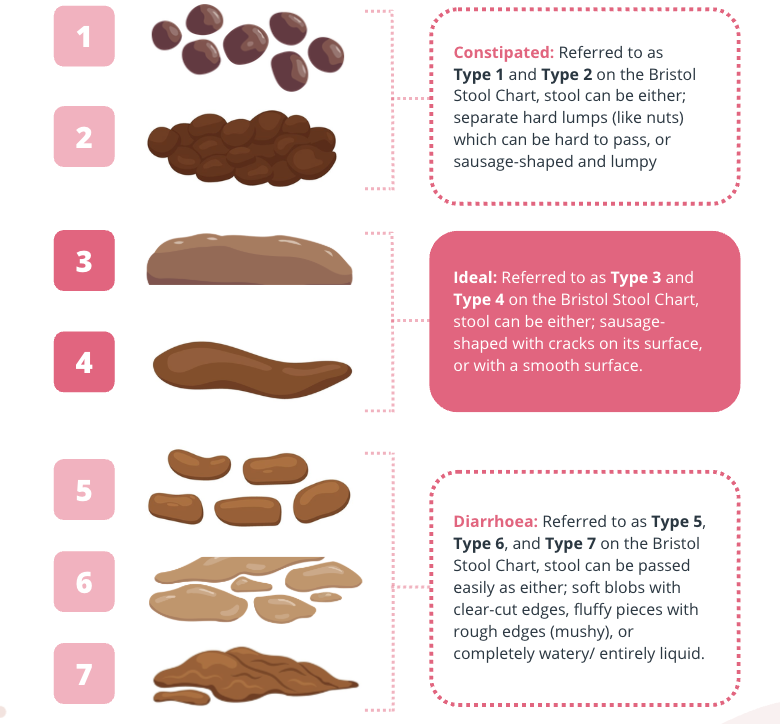
Reference: Adapted from The Bristol Stool Chart: Lewis SJ, Heaton KW. Stool form scale as a useful guide to intestinal transit time. Scand J Gastroenterol. 1997;32(9):920–924.
What Is the Bristol Stool Chart?
The Bristol Stool Chart categorises stool into seven types:
Types 1-2: Hard, lumpy stools that often indicate constipation.
Types 3-4: Smooth, soft, well-formed stools that are generally considered ideal.
Types 5-7: Softer, mushy or watery stools that may indicate food is moving too quickly through the digestive tract.
While the chart provides a useful guide, what's most important is knowing what's normal for you and recognising when things change.
Constipation Isn't Just About Not Going
One of the biggest misconceptions about constipation is that it means you're not going to the toilet at all. In reality, bowel frequency can vary significantly between individuals. Anywhere from three bowel motions per day to three per week can be considered normal.
Constipation is often more about how you go than how often you go.
Signs of constipation may include:
- Passing small, hard stools (Types 1-2 on the Bristol Stool Chart)
- Straining during bowel movements
- Feeling like you haven't fully emptied your bowels
- Feeling bloated, heavy or uncomfortable after going
- A sensation that your gut feels sluggish or "stuck"
Many people are surprised to learn they're experiencing constipation despite having daily bowel movements.
Could Your Bloating Actually Be Constipation?
Bloating is one of the most common symptoms we see in clinic, and constipation is often a hidden contributor.
You might be going to the toilet regularly, but if you're not fully emptying your bowels or moving stool through efficiently, stool can sit in the colon for longer periods. This allows gut bacteria more time to ferment food, producing gas and contributing to bloating, abdominal discomfort, and that heavy feeling many people describe.
This is one reason bloating can feel so confusing.
You may be "going" every day but still not moving enough stool through to feel comfortable.
Unfortunately, when people feel bloated, the first instinct is often to eat less, skip meals, or eliminate even more foods from their diet.
While this might seem logical, it can sometimes make symptoms worse.
Reducing food intake may mean:
- Less fibre
- Less food volume
- Less fluid from foods
- Less dietary variety
- Fewer beneficial plant foods for your gut microbiome
In many cases, your gut may need more support, not more restriction.
What About Loose Stools?
Types 5-7 on the Bristol Stool Chart indicate stools that are soft, mushy, or watery.
Occasional loose stools can happen to anyone, but persistent diarrhoea may be linked to:
- Gastrointestinal infections
- Food intolerances
- Irritable Bowel Syndrome (IBS)
- Stress and anxiety
- Certain medications
- Inflammatory bowel conditions
If loose stools persist for more than a few weeks, it's important to seek medical advice.
Perimenopause and Gut Health: An Overlooked Connection
For women in perimenopause, constipation and bloating can become even more noticeable.
Fluctuating levels of oestrogen and progesterone can affect gut motility, slowing the movement of food through the digestive tract and contributing to changes in bowel habits.
Many women notice:
- Increased constipation
- More bloating
- Changes in stool consistency
- Greater digestive discomfort
These symptoms can sometimes be mistaken for food intolerances or other digestive conditions. While hormonal changes can certainly affect the gut, ongoing symptoms shouldn't automatically be attributed to perimenopause alone. A proper assessment can help determine whether hormones, diet, stress, lifestyle factors, or an underlying gut condition may be contributing.
Supporting Healthy Bowel Motions
If your stool regularly falls outside Types 3-4, there are some simple foundations that can help support healthy digestion and bowel regularity.
Aim to include:
✔ 20-30g of protein at meals
✔ Around 7-10g of fibre at meals
✔ Two to three different coloured plant foods each day
✔ Healthy fats such as nuts, seeds, avocado, olive oil, or oily fish
✔ Plenty of fluids across the day
✔ Regular physical activity
Watch out for our blog next week where we will cover these in more detail!
Bowel Cancer Awareness Month: Know What's Normal for You
One thing we want to highlight during Bowel Cancer Awareness Month is to become familiar with your normal bowel habits. Many symptoms associated with bowel cancer can also occur in common digestive conditions, which is why persistent changes should never be ignored.
Speak with your GP if you experience:
- A significant change in bowel habits lasting more than a few weeks
- Persistent diarrhoea or constipation
- Blood in your stool
- Unexplained abdominal pain
- Unexplained weight loss
- Ongoing fatigue
- A feeling that your bowel does not completely empty
- Severe constipation, vomiting, or symptoms suggestive of faecal impaction
While these symptoms do not automatically mean bowel cancer, they should always be properly assessed.
A Final Word
Your bowel motions can tell you a lot about your digestive health.
The Bristol Stool Chart is a simple but powerful tool that can help identify patterns, monitor changes, and provide valuable information about how your gut is functioning.
This Bowel Cancer Awareness Month, take a moment to check in with your bowel habits. Understanding what's normal for you is one of the simplest ways to stay proactive about your gut health.
And remember: if you're experiencing ongoing bloating, constipation, diarrhoea, or changes in bowel habits, please don't ignore them. The sooner you investigate persistent symptoms, the sooner you can get the right support.
Once you know what's driving it, here's what to actually put on your plate.
4 Bloat-Friendly Dinners 4 of my favourite plant-rich, quick and easy meals to support regular, comfortable digestion, plus a sample meal plan and shopping list.
Get the Free Recipes
Doing everything 'right' and your gut still isn't happy?
You asked for it, so I'm putting it together.
Fibre for Grumpy Guts is coming.
Maybe you’re having oats for breakfast, seeds on everything and plenty of veg, and you’re still bloated or waiting for a decent poo. Maybe you added more fibre because everyone said it would help, and you felt worse. Or you’ve cut out onion, garlic, bread and beans and you’re still not comfortable.
Often the trouble isn’t fibre itself. It’s the mix of fibre types, how much, and the order you add them in.
Imagine easier poos, less bloating, and enjoying more of the foods you love.
That’s what my new mini course will help you with: which fibre to start with, how much and when, and how to build up from there.
Grab my free Fibre for Grumpy Guts starter guide and I’ll add you to the waitlist too. Waitlist members get first access on Wednesday 11 November and the founding price of $37 for 3 days only, plus two live check-ins with me. After that, it’s $57 for everyone.
And follow @the.guthealthdietitian on Instagram for more fibre tips while I finish it.
You are signing-up for notification ONLY by completing this form. No tricky stuff! We promise never to spam you.